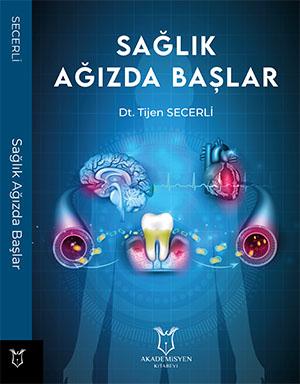
Ağzın Savunma Sistemi
Özet
Ağız savunma sistemi, mukoza, tükürük akımı ve epitel hücreler arasındaki özelleşmiş bağlantılardan oluşan fiziksel bir bariyerle başlar. Çok katlı yassı epitel hücreleri arasındaki sıkı bağlantılar, geçirgenliği düzenleyerek patojenlerin ve istenmeyen iyonların girişini engeller. Bu bağlantıların bütünlüğü, kalsiyum seviyesi ve yeterli glutamin varlığı gibi metabolik faktörlere bağlıdır. Gap junctionlar ise hücreler arası iletişimi sağlayarak ağız sağlığının korunmasında tamamlayıcı bir rol oynar.
The oral defense system initiates with a physical barrier composed of mucosa, saliva flow, and specialized intercellular junctions between epithelial cells. Tight junctions between stratified squamous epithelial cells regulate permeability, effectively preventing the entry of pathogens and unwanted ions. The integrity of these connections relies on metabolic factors such as calcium levels and the availability of glutamine. Gap junctions further contribute by facilitating intercellular communication, which is essential for maintaining oral health.
Referanslar
Comelli EM, Guggenheim B, Stingele F, Neeser JR. Selection of dairy bacterial strains as probiotics for oral health. Eur J Oral Sci 2002; 110: 218-224.)
Çaglar E, Sandallı N, Twetman S, Kavaloglu S, Ergeneli S, Selvi S. Effect of youghurt with Bifidobacterium DN- 173010 on salivary mutans streptococci and lactobacilli in young adults. Acta Odont Scand 2005; 63:317–20)
Çağlar E, Çıldır SK, Ergeneli S, Sandallı N, Twetman S. Salivary mutans streptococci and lactobacilli levels after ingestion of the probiotic bacterium Lactobacillus reuteri ATCC 55730 by straws or tablets. Acta Odontol Scand. 2006; 64:314-8)
Haukioja A, Yli-Knuuttila H, Liomaranta V, Kari K, Ouwehand AC, Meurman JH, Tenovuo J.Oral adhesion and survival of probiotic and other lactobacilli and bifidobacteria in vitro. Oral Micorbiol Immunol 2006; 21: 326–332.)
Haukioja A, Loimarant V, Tenovuo J.Probiotic bacteria affect the composition of salivary pellicle and streptococcal adhesion in vitro. OralMicrobiol Immunol 2008; 23: 336–343.)
İbrahim, F., Halttunen, T., Tahvonen, R. and Salminen, S. 2006. Probiotic bacteria as potential detoxification tools: Assesing their heavy metal binding isoterms. Can. J. Microbiol., 52: 877-885.
Karakan M, Elmacıoğlu MA, Nazlıkul H; Probiyotikler - Prebiyotikler ve Bağışıklık Sistemi Cilt 10, Sayı 1 : 2016 Bilimsel Tamamlayıcı Tıp, Regülasyon ve Nöralterapi Dergisi s:22-25)
Konkel JE, Chen W. Balancing acts: the role of TGF-B in the mucosal immune system. Trends Mol Med. 2011; 17:668-676. 37)
Lee YK, Mazmanian SK, Has microbiota played acri cal role inthe evolu on of the adap ve immune system? Sience 2010; 330:1768-1773.)
Molloy MJ, Bouladoux N, Belkaid Y. İntes nal microbiota: shaping local and systemic immune responses. Sem Immunol 2012; 24:58-86.)
Näse L, Hatakka K, Savilahti E, Saxelin M, Ponka A, Poussa T, et al. Effect of long-term consumption of a probiotic bacterium, Lactobacillus rhamnosus GG, in milk on dental caries and caries risk in children. Caries Res 2001;35:412–20)
Oishi, K., Ito, M., Sato,T., Yokoi, W. and Sawada, H. 2008. Effect of probiotics, Bifidobacterium breve and Lactobacillus casei, on bisphenol a exposure in rats. Biosci. Biotechnol. Biochem. 72: 1409-1415.
Round JL, Mazmanian SK. Inducible Foxp3+ regultory T-cell development by a commensal bacterum of the intes nal microbiota. Proc Natl Acad Sci USA 2010; 107:12204-12209)
Romeo J, Nova E, Warnberg J, Gomez-Mar nez S, Diaz Ligia LE, Marcos A. Immunmodulatory eff ect of fi bres, probio cs and synbio cs in diff erent life-stage. Nutr Hosp. 2010; 25:341-349.)
Wullaert A. role of NF-kappaB ac va on in intes nal immune homeostasis. Int J Med Microbiol. 2010; 300:49-56.)
Zhai, Q., Yin, R., Yu, L., Wang, G., Tian , F.,Yu , R., Zhao , J., Liu, X., Chen, Y.Q., Zhang , H. and Chen, W. 2015. Screening of lactic acid bacteria with potential protective effects against cadmium toxicity. Food Control. 54: 23-30.
Zoghi, A., Khosravi-Darani, K. and Sohrabvandi, S. 2014. surface binding of toxins and heavy metals by probiotics. Mini-Reviews in Medicinal Chemistry. 14: 84-98.