Yüksek Yoğunluklu İnterval Antrenmanların Hormonal ve Fizyolojik Yanıtlar Üzerine Etkisi
Özet
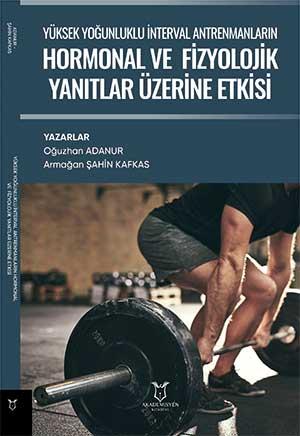
Oğuzhan Adanur ve Dr. Öğr. Üyesi Armağan Şahin Kafkas tarafından kaleme alınan "Yüksek Yoğunluklu İnterval Antrenmanların Hormonal ve Fizyolojik Yanıtlar Üzerine Etkisi" adlı akademik eser, İnönü Üniversitesi Sağlık Bilimleri Enstitüsü'nde yürütülen yüksek lisans tez çalışmasına dayanmaktadır. Kitap, hem profesyonel hem de sedanter bireylerde başarı ve performans artışının temeli olan antrenman yüklenmesi ile dinlenme aralıklarının fizyolojik ve hormonal mekanizmalar üzerindeki etkilerini detaylıca incelemektedir. Eser bünyesinde; egzersizin aerobik ve anaerobik etkileri, kardiyovasküler ile kas sistemi yanıtları, maksimal oksijen tüketimi (VO2max), kalp atım hızı, laktik asit düzeyleri ve algılanan zorluk derecesi (BORG) gibi fizyolojik parametreler kapsamlı şekilde analiz edilmektedir. Bununla birlikte ACTH, büyüme hormonu (GH), insülin, testosteron ve kortizol hormon yanıtları ile kreatin kinaz (CK) ve laktat dehidrogenaz (LDH) enzimleri üzerinden egzersiz kaynaklı kas hasarı ve gecikmiş kas ağrısı (GKA) süreçleri değerlendirilmektedir. Kısa, orta ve uzun interval metotları ile Tabata uygulamalarının ele alındığı bu çalışma, spor bilimcileri, antrenörler ve sporcular için verimli antrenman programları oluşturmada bilimsel bir rehber niteliği taşımaktadır.
The academic work titled "Effects of High-Intensity Interval Training on Hormonal and Physiological Responses", written by Oğuzhan Adanur and Asst. Prof. Dr. Armağan Şahin Kafkas, is based on a master's thesis conducted at İnönü University Institute of Health Sciences. The book thoroughly examines the impacts of training workload and rest intervals—which form the basis of success and performance improvement in both professional athletes and sedentary individuals—on physiological and hormonal mechanisms. Within the scope of the work, physiological parameters such as the aerobic and anaerobic effects of exercise, cardiovascular and muscular system responses, maximal oxygen consumption (VO2max), heart rate, lactic acid levels, and rating of perceived exertion (BORG) are comprehensively analyzed. Furthermore, critical hormonal responses including ACTH, growth hormone (GH), insulin, testosterone, and cortisol, as well as exercise-induced muscle damage and delayed onset muscle soreness (DOMS) through creatine kinase (CK) and lactate dehydrogenase (LDH) enzymes, are evaluated. Addressing short, medium, and long interval methods alongside Tabata training applications, this study serves as a scientific guide for sports scientists, coaches, and athletes in designing efficient training programs.
Referanslar
Açıkada, C., & Ergen, E. (1990). Bilim ve spor. Ankara: Büro-tek ofset Matbaacılık.
Ağgön, E. (2012). Genç Kayakla Atlamacılarda Gevşeme Egzersizlerinin Bazı Stres Hormonları ve Proteinleri Üzerine Etkileri. Atatürk Üniversitesi,Sağlık Bilimleri Enstitüsü,Spor Sağlık Bilimleri Anabilim Dalı,Doktora Tezi,Erzurum ,2012.
Ahmaidi S, Granier P, Taoutaou Z, Mercier J, Du- bouchaud H, P. C. (1996). Effects of active recovery on plasma lactate and anaerobic power following repeated intensive exercise. Medicine & Science in Sports & Exercise, 28(4), 450–456. https://doi.org/10.1097/00005768-199604000-00009
Ahtiainen, J. P., Pakarinen, A., Kraemer, W. J., & Hakkinen, K. (2004). Acute Hormonal Responses to Heavy Resistance Exercise in Strength Athletes Versus Nonathletes. Canadian Journal of Applied Physiology, 29(5), 527–543. https://doi.org/10.1139/h04-034
Akgün, N. (1991). Spor Hekimliği Açısından İlaçlar,Doping,Anti-Doping Eğitimi ve Doping Kontrolünün Yönleri. Olimpil Solidarite Bölgesel Aenoc Kursu,Hacettepe Üniversitesi Eczacılık Fakültesi Doping Kontrol Merkezi,Ankara, p.p:31-34.
Akgün, N. (1994). Egzersiz Fizyolojisi. Ege Üniversitesi Basımevi, İzmir, 1992; s.23–168.
Akkuş Y. (2014). Hentbolcularda Genel ve Özel Hazırlık Dönemi Aerobik ve Anaerobik Güç Testleri İle Laktik Asit Düzeyleri Arasındaki İlişki. Ağrı İbrahim Çeçen Üniversitesi.
Altınkök, M. (2015). Yüksek şiddetli interval antrenman uygulamalarının etki alanlarının İncelenmesi. International Journal of Social Sciences and Education Research, 1(1), 463–465.
Anbarasi, K., Vani, G., Balakrishna, K., & Devi, C. S. S. (2005). Creatine kinase isoenzyme patterns upon chronic exposure to cigarette smoke: Protective effect of Bacoside A. Vascular Pharmacology, 42(2), 57–61. https://doi.org/10.1016/j.vph.2005.01.003
Armstrong, R. B. (1990). Initial events in exercise-induced muscular injury. Medicine and Science in Sports and Exercise, 22(4), 429–435. Retrieved from http://www.ncbi.nlm.nih.gov/pubmed/2205778
Aron, D. C. (1997). Hypothalamus and pituitary. Basic Clinical Endocrinology, 95–156.
Astrand, P., & Rodalh, K. (1986). Texbook of work Physiology: Physiological Bases of Exercise. Mc. Graw Hill Book Company U.S.A.
Atlı, S. O. (2015). 25-35 Yaş Arası Sedanter Kadınlarda Yüksek Yoğunluklu Bisiklet Egzersizinin Vücut Kompozisyonu ve MaxVO2 Üzerine Etkisinin İncelenmesi. Sağlık Bilimleri Enstitüsü Beden Eğitimi ve Spor Anabilim Dalı Yüksek Lisans Tezi İstanbul Haliç Üniversitesi,2015.
Başgöze O. (1982). Egzersizde Laktik Asit Artışı ve Toparlanma Döneminde Yorgunluğun Giderilmesine Etkiyen Değişik Yöntemlerin Karşılaştırılması. Hacettepe Üniversitesi.
Baumann, G., Amburn, K. D., Buchanan, T. A. (1987). The Effect of Circulating Growth Hormone-Binding Protein on Metabolic Clearance, Distribution, and Degradation of Human Growth Hormone*. The Journal of Clinical Endocrinology & Metabolism, 64(4), 657–660. https://doi.org/10.1210/jcem-64-4-657
Bıyıklı, T. (2007). Vücut İmgesinin Ve Özel Spor Salonlarının Egzersize Baslama Ve Devam Etme Motivasyonu Üzerine Etkisi. Gazi Üniversitesi, Yüksek Lisans Tezi, Eğitim Bilimleri Anabilim Dalı, Ankara.
Boileau, R. A., Misner, J. E., Dykstra, G. L., & Spitzer, T. A. (1983). Blood lactic acid removal during treadmill and bicycle exercise at various intensities. The Journal of Sports Medicine and Physical Fitness, 23(2), 159–167. Retrieved from http://www.ncbi.nlm.nih.gov/pubmed/6632854
Bompa, T., & Haff, G. (2015). Periodization:Theory and Methodology of Training. Çeviri: Bağırgan T. Dönemleme: Antrenman Kuramı ve Yöntemi. 5. Baskı, Ankara, Spor Yayınevi ve Kitabevi , 2015: 137.
Bosco, C., Tihanyit, J., & Viru, A. (1996). Relationships between field fitness test and basal serum testosterone and Cortisol levels in soccer players. Clinical Physiology, 16(3), 317–322. https://doi.org/10.1111/j.1475-097X.1996.tb00577.x
Bottecchia, D., Bordin, D., & Martino, R. (1987). Effect of different kinds of physical exercise on the plasmatic testosterone level of normal adult males. The Journal of Sports Medicine and Physical Fitness, 27(1), 1–5. Retrieved from http://www.ncbi.nlm.nih.gov/pubmed/3599962
Brown, S. J., Child, R. B., Day, S. H., & Donnelly, A. E. (1997). Exercise-induced skeletal muscle damage and adaptation following repeated bouts of eccentric muscle contractions. Journal of Sports Sciences, 15(2), 215–222. https://doi.org/10.1080/026404197367498
Buono, M. J., Yeager, J. E., & Sucec, A. A. (1987). Effect of aerobic training on the plasma ACTH response to exercise. Journal of Applied Physiology (Bethesda, Md. : 1985), 63(6), 2499–2501. https://doi.org/10.1152/jappl.1987.63.6.2499
Çakmakcı, S. (2013). Farklı Branşlardaki Sporcularda Anaerobik Egzersizin Bazı Hormon Düzeylerine Etkisi. Selçuk Üniversitesi.
Chen, T. C., & Hsieh, S. S. (2001). Effects of a 7-day eccentric training period on muscle damage and inflammation. Medicine & Science in Sports & Exercise, 33(10), 1732–1738. https://doi.org/10.1097/00005768-200110000-00018
Chwalbińska-Moneta, J., Kruk, B., Nazar, K., Krzemiński, K., Kaciuba-Uściłko, H., & Ziemba, A. (2005). Early effects of short-term endurance training on hormonal responses to graded exercise. Journal of Physiology and Pharmacology : An Official Journal of the Polish Physiological Society, 56(1), 87–99. Retrieved from http://www.ncbi.nlm.nih.gov/pubmed/15795477
Clarkson, P. M., & Tremblay, I. (1988). Exercise-induced muscle damage, repair, and adaptation in humans. Journal of Applied Physiology, 65(1), 1–6. https://doi.org/10.1152/jappl.1988.65.1.1
Clarkson, P M, & Sayers, S. P. (1999). Etiology of exercise-induced muscle damage. Canadian Journal of Applied Physiology = Revue Canadienne de Physiologie Appliquee, 24(3), 234–248. https://doi.org/10.1139/h99-020
Clarkson, Priscilla M., Kearns, A. K., Rouzier, P., Rubin, R., & Thompson, P. D. (2006). Serum Creatine Kinase Levels and Renal Function Measures in Exertional Muscle Damage. Medicine & Science in Sports & Exercise, 38(4), 623–627. https://doi.org/10.1249/01.mss.0000210192.49210.fc
Coffey, V., Leveritt, M., & Gill, N. (2004). Effect of recovery modality on 4-hour repeated treadmill running performance and changes in physiological variables. Journal of Science and Medicine in Sport, 7(1), 1–10. https://doi.org/10.1016/S1440-2440(04)80038-0
Coombes, J. S., & McNaughton, L. R. (2000). Effects of branched-chain amino acid supplementation on serum creatine kinase and lactate dehydrogenase after prolonged exercise. The Journal of Sports Medicine and Physical Fitness, 40(3), 240–246. Retrieved from http://www.ncbi.nlm.nih.gov/pubmed/11125767
Cumming, D. C., Brunsting, L. A., Strich, G., Ries, A. L., & Rebar, R. W. (1986). Reproductive hormone increases in response to acute exercise in men. Medicine and Science in Sports and Exercise, 18(4), 369–373. Retrieved from http://www.ncbi.nlm.nih.gov/pubmed/2943968
Dağdalıoğlu, Ö. (2009). Elit Yüzücülerde ve Sedanterlerde Aerobik ve Anaerobik Egzersizin Oksidatif Stres Üzerine Etkisi ve PON1 Gen Polimorfizmlerinin Araştırılması. Sağlık Bilimleri Enstitüsü Beden Eğitimi ve Spor Anabilim Dalı Doktora Tezi İstanbul Marmara Üniversitesi.
Dağlıoğlu, Ö., Hazar, M. (2009). Yüksek hız koşu yüklenmesinin bazı vücut hormonlarının ani değişimine etkisi. Atatürk Üniversitesi Beden Eğitimi ve Spor Bilimleri Dergisi, 11(2), 35–45.
Daniels, M. E. (1992). Lilly’s Humatrope Experience. Nature Biotechnology, 10(7), 812–812. https://doi.org/10.1038/nbt0792-812a
De Vos, N., Singh, N., Ross, D., & Stravrinos, T. (2005). Optimal load for increasing muscle power during explosive resistance training in older adults. The Journals of Gerontology, 60A, 5, 638-647.
de Vries, W. R., Bernards, N. T. M., de Rooij, M. H., & Koppeschaar, H. P. F. (2000). Dynamic Exercise Discloses Different Time-Related Responses in Stress Hormones. Psychosomatic Medicine, 62(6), 866–872. https://doi.org/10.1097/00006842-200011000-00017
Demiriz, M. (2013). Farklı Dinlenme Aralıklarında Yapılan Anaerobik İnterval Antrenmanın, Aerobik Kapasite, Anaerobik Eşik Ve Kan Parametrelerine Etkilerinin Karşılaştırılması. . Sağlık Bilimleri Enstitüsü, Beden Eğitimi ve Spor Anabilim Dalı. Yüksek Lisans tezi, Balıkesir: Balıkesir Üniversitesi.
Dere, F., & Yücel, B. (1994). Spor Eğitimi İçin Fonksiyonel Anatomi. 1. Baskı. Adana: Okullar Pazarı Kitabevi, 1994: 63-185.
Domínguez-Sanchéz, M. A., Bustos-Cruz, R. H., Velasco-Orjuela, G. P., Quintero, A. P., Tordecilla-Sanders, A., Correa-Bautista, J. E., … Ramírez-Vélez, R. (2018). Acute Effects of High Intensity, Resistance, or Combined Protocol on the Increase of Level of Neurotrophic Factors in Physically Inactive Overweight Adults: The BrainFit Study. Frontiers in Physiology, 9. https://doi.org/10.3389/fphys.2018.00741
Dündar, U. (2015). Antrenman Teorisi (9.Basım). Ankara: Nobel Kitapevi.
Durand, R. J., Castracane, V. D., Hollander, D. B., Tryniecki, J. L., Bamman, M. M., O’Neal, S., … Kraemer, R. R. (2003). Hormonal responses from concentric and eccentric muscle contractions. Medicine and Science in Sports and Exercise, 35(6), 937–943. https://doi.org/10.1249/01.MSS.0000069522.38141.0B
Ebbeling, C. B., & Clarkson, P. M. (1989). Exercise-Induced Muscle Damage and Adaptation. Sports Medicine, 7(4), 207–234. https://doi.org/10.2165/00007256-198907040-00001
Emberts, T., Porcari, J., Dobers-Tein, S., Steffen, J., & Foster, C. (2013). Exercise intensity and energy expenditure of a tabata workout. Journal of Sports Science & Medicine, 12(3), 612–613. Retrieved from http://www.ncbi.nlm.nih.gov/pubmed/24137082
Ergen, E., Başoğlu, S., Demirel, H., Güner, R., Turnagöl, H., Zergeroğlu, A., & Ülkar, B. (2002). Egzersiz Fizyolojisi. Egzersiz Fizyolojisi, Ankara: Nobel Yayın Dağıtım 2002.
Ergen, E., Demirel, H., Güner, R., & Turnagöl, H. (1993). Spor Fizyolojisi. Anadolu Üniversitesi Yayını, Eskisehir.
Erkoç, R. (1974). İnsan Anatomi ve Fizyolojisi. Gençlik ve Spor Bakanlığı Yayını,Ankara.
Farrell, P. A., Garthwaite, T. L., & Gustafson, A. B. (1983). Plasma adrenocorticotropin and cortisol responses to submaximal and exhaustive exercise. Journal of Applied Physiology: Respiratory, Environmental and Exercise Physiology, 55(5), 1441–1444. https://doi.org/10.1152/jappl.1983.55.5.1441
Fein, J. T., Haymes, E. M., & Buskirk, E. R. (1975). Effects of daily and intermittent exposures on heat acclimation of women. International Journal of Biometeorology, 19(1), 41–52. https://doi.org/10.1007/BF01459840
Fielding, R. A., Manfredi, T. J., Ding, W., Fiatarone, M. A., Evans, W. J., & Cannon, J. G. (1993). Acute phase response in exercise. III. Neutrophil and IL-1 beta accumulation in skeletal muscle. American Journal of Physiology-Regulatory, Integrative and Comparative Physiology, 265(1), R166–R172. https://doi.org/10.1152/ajpregu.1993.265.1.R166
Finsterer, J. (2012). Biomarkers of peripheral muscle fatigue during exercise. BMC Musculoskeletal Disorders, 13, 218. https://doi.org/10.1186/1471-2474-13-218
Fox, E. L., Bowers, R. W., & Foss, M. L. (1988). Endokrin sistem ve egzersiz. Ankara: Spor yayınevi ve kitapevi.
Fox, Bowers, & Foss. (1996). Beden Eğitimi ve Sporun Fizyolojik Temelleri. Ankara: Bagırgan Yayınevi.
Fox, E. (1998). The Physiological Basis of Physical Education and Athletics. 4th edition,Saunders College Publishing,Philadelphia.
Franchini, E., Yuri Takito, M., Yuzo Nakamura, F., Ayumi Matsushigue, K., & Peduti Dal’Molin Kiss, M. A. (2003). Effects of recovery type after a judo combat on blood lactate removal and on performance in an intermittent anaerobic task. The Journal of Sports Medicine and Physical Fitness, 43(4), 424–431. Retrieved from http://www.ncbi.nlm.nih.gov/pubmed/14767401
Froelicher, V., & Myers, J. (2000). Basic exercise physiology. In: Exercise and heart (4th ed.). Philadelphia: Saunders Comp.
Ftaiti, F., Jemni, M., Kacem, A., Zaouali, M. A., Tabka, Z., Zbidi, A., & Grélot, L. (2008). Effect of hyperthermia and physical activity on circulating growth hormone. Applied Physiology, Nutrition, and Metabolism = Physiologie Appliquee, Nutrition et Metabolisme, 33(5), 880–887. https://doi.org/10.1139/H08-073
Ganong, F. (1995). Tıbbı Fizyoloji. Barış Kitap Evi,İstanbul,(çeviri Editörü:A.Doğan).
Gibala, M. (2007). High-intensity interval training: new ınsights. Sports Science Exchange,20.
Goldstein, D. (2003). Catecholamines and stress. Endocrine Regulations, 37(2), 69–80.
Greer, B. K., Woodard, J. L., White, J. P., Arguello, E. M., & Haymes, E. M. (2007). Branched-Chain Amino Acid Supplementation and Indicators of Muscle Damage after Endurance Exercise. International Journal of Sport Nutrition and Exercise Metabolism, 17(6), 595–607. https://doi.org/10.1123/ijsnem.17.6.595
Grieco, C. R., Swain, D. P., Colberg, S. R., Dowling, E. A., Baskette, K., Zarrabi, L., … Somma, C. T. (2013). Effect of Intensity of Aerobic Training on Insulin Sensitivity/Resistance in Recreationally Active Adults. Journal of Strength and Conditioning Research, 27(8), 2270–2276. https://doi.org/10.1519/JSC.0b013e31827da2f0
Gulick, D. T., & Kimura, I. F. (1996). Delayed Onset Muscle Soreness: What Is It and How Do We Treat It? Journal of Sport Rehabilitation, 5(3), 234–243. https://doi.org/10.1123/jsr.5.3.234
Günay, M., Tamer, K., Cicioğlu, H. (2013). Spor Fizyolojisi ve Performans Ölçümü.
Günay, M. (1998). Egzersiz Fizyolojisi. Ankara, Bağırgan Yayınevi p.o 29-115.
Günay, M., Tamer, K., & Cicioğlu, İ. (2006). Spor Fizyolojisi ve Performans Ölçümü, Enerji Metabolizması, Solunum Sistemi ve Egzersiz. s. 39-72, 163-181. Gazi Kitabevi, Ankara.
Günay, M., Tamer, K., & Cicioğlu, İ. (2010). Spor Fizyolojisi ve Performans Ölçümü. Ankara: Pegem Yayınevi.
Gupta, S., Goswami, A., Sadhukhan, A., & Mathur, D. (1996). Comparative Study of Lactate Removal in Short Term Massage of Extremities, Active Recovery and a Passive Recovery Period After Supramaximal Exercise Sessions. International Journal of Sports Medicine, 17(02), 106–110. https://doi.org/10.1055/s-2007-972816
Hackney, A. C. (2006). Stress and the neuroendocrine system: the role of exercise as a stressor and modifier of stress. Expert Review of Endocrinology & Metabolism, 1(6), 783–792. https://doi.org/10.1586/17446651.1.6.783
Hackney, A., Perrmen, S., & Nowacki, J. (1994). Physiologial profiles of Overtrained and Stale athletes: a rewiew. New Studies in Athletics 9 (33)p.p 99.
Häkkinen, K., Pakarinen, A., Kraemer, W. J., Newton, R. U., & Alen, M. (2000). Basal concentrations and acute responses of serum hormones and strength development during heavy resistance training in middle-aged and elderly men and women. The Journals of Gerontology. Series A, Biological Sciences and Medical Sciences, 55(2), B95-105. https://doi.org/10.1093/gerona/55.2.b95
Harbili, S. (1999). Kuvvet Antremanlarının ve Bazı Hormonlar Üzerine Etkisi. Konya.
Hatipoğlu MT. (1987). Anatomi ve Fizyoloji (6. Baskı). Ankara: Hatipoğlu Yayınevi.
Havas, E., Komulainen, J., & Vihko, V. (1997). Exercise-Induced Increase in Serum Creatine Kinase is Modified by Subsequent Bed Rest. International Journal of Sports Medicine, 18(08), 578–582. https://doi.org/10.1055/s-2007-972684
Hermansen, L., & Stensvold, I. (1972). Production and Removal of Lactate during Exercise in Man. Acta Physiologica Scandinavica, 86(2), 191–201. https://doi.org/10.1111/j.1748-1716.1972.tb05325.x
Hickner, R. C., Fisher, J. S., Hansen, P. A., Racette, S. B., Mier, C. M., Turner, M. J., & Holloszy, J. O. (1997). Muscle glycogen accumulation after endurance exercise in trained and untrained individuals. Journal of Applied Physiology, 83(3), 897–903. https://doi.org/10.1152/jappl.1997.83.3.897
Hody, S., Rogister, B., Leprince, P., Wang, F., & Croisier, J.-L. (2013). Muscle fatigue experienced during maximal eccentric exercise is predictive of the plasma creatine kinase (CK) response. Scandinavian Journal of Medicine & Science in Sports, 23(4), 501–507. https://doi.org/10.1111/j.1600-0838.2011.01413.x
Hoffman, M. (2006). Adaptations to endurance exercise training in: Frontera WR, Slovik DM, Dawson DM. (eds). Exercise in Rehabilitation Medicine. (2nd ed). USA: Human Kinetics, 13-23.
Hough, T. (1902). Ergographic Studies in Muscular Soreness. American Physical Education Review, 7(1), 1–17. https://doi.org/10.1080/23267224.1902.10649879
Houglum, J. E., Harrelson, G. L. (2011). Principles of pharmacology for athletic trainers. Slack Incorporated.
Jamurtas, A. Z., Theocharis, V., Tofas, T., Tsiokanos, A., Yfanti, C., Paschalis, V., … Nosaka, K. (2005). Comparison between leg and arm eccentric exercises of the same relative intensity on indices of muscle damage. European Journal of Applied Physiology, 95(2–3), 179–185. https://doi.org/10.1007/s00421-005-1345-0
Janssen, J. A. M. J. L., Stolk, R. P., Pols, H. A. P., Grobbee, D. E., & Lamberts, S. W. J. (1998). Serum Total IGF-I, Free IGF-I, and IGFBP-1 Levels in an Elderly Population. Arteriosclerosis, Thrombosis, and Vascular Biology, 18(2), 277–282. https://doi.org/10.1161/01.ATV.18.2.277
Jenkins, P. J. (1999). Growth hormone and exercise. Clinical Endocrinology, 50(6), 683–689. https://doi.org/10.1046/j.1365-2265.1999.00784.x
Jürimäe, J., Jürimäe, T., & Purge, P. (2007). Plasma ghrelin is altered after maximal exercise in elite male rowers. Experimental Biology and Medicine (Maywood, N.J.), 232(7), 904–909. Retrieved from http://www.ncbi.nlm.nih.gov/pubmed/17609506
Kalyon, T. . (1994). Spor Hekimliği. 2.Baskı,GATA,Basımevi Ankara.
Karacabey, K. (2009). The Effect of Exercise on Leptin, Insulin, Cortisol and Lipid Profiles in Obese Children. Journal of International Medical Research, 37(5), 1472–1478. https://doi.org/10.1177/147323000903700523
Karatan, O. V. (2016). Yetişken Bireylerde Aerobik Egzersiz Programının Kan Lipitleri ve Vücut Kompozisyonu Üzerine Etkileri. Muğla Sıtkı Koçman Üniversitesi, Yüksek Lisans Tezi, Rekreasyon Anabilim Dalı,Sosyal Bilimler Enstitüsü Muğla.
Karvonen, J., Peltola, E., Saarela, J., & Nieminen, M. M. (1990). Changes in running speed, blood lactic acid concentration and hormone balance during sprint training performed at an altitude of 1860 metres. The Journal of Sports Medicine and Physical Fitness, 30(2), 122–126. Retrieved from http://www.ncbi.nlm.nih.gov/pubmed/2402129
Karvonen MJ, Kentala E, M. O. (1957). The effects of training on heart rate: a longitudinal study. Annales Medicinae Experimentalis et Biologiae Fenniae, 35, 307–315.
Kaynar Ö. (2014). Elit Güreşçilerde Antrenmanın Hipofiz Bezi Hormonları ve Karaciğer Enzimleri Üzerine Etkisi. Atatürk Üniversitesi.
Khoo, E. Y. H., Wallis, J., Tsintzas, K., Macdonald, I. A., & Mansell, P. (2010). Effects of exenatide on circulating glucose, insulin, glucagon, cortisol and catecholamines in healthy volunteers during exercise. Diabetologia, 53(1), 139–143. https://doi.org/10.1007/s00125-009-1579-1
Kızılay, F. (2012). Aerobik Egzersizin Sedanter Bayanlarda Vücut Kompozisyonu,Bazal Metabolizma Hızı,Total Oksidan ve Antioksidan Kapasite Üzerine Etkisinin İncelenmesi. Sağlık Bilimleri Enstitüsü Beden Eğitimi ve Spor Anabilim Dalı Yüksek Lisans Tezi Malatya İnönü Üniversitesi,2012.
Kopchick, J. J., Parkinson, C., Stevens, E. C., & Trainer, P. J. (2002). Growth Hormone Receptor Antagonists: Discovery, Development, and Use in Patients with Acromegaly. Endocrine Reviews, 23(5), 623–646. https://doi.org/10.1210/er.2001-0022
Kraemer, R. R., Chu, H., & Castracane, V. D. (2002). Leptin and Exercise. Experimental Biology and Medicine, 227(9), 701–708. https://doi.org/10.1177/153537020222700903
Le Roith, D. (1997). Insulin-Like Growth Factors. New England Journal of Medicine, 336(9), 633–640. https://doi.org/10.1056/NEJM199702273360907
Lee, J., Goldfarb, A. H., Rescino, M. H., Hegde, S., Patrick, S., Apperson, K. (2002). Eccentric exercise effect on blood oxidative-stress markers and delayed onset of muscle soreness. Medicine & Science in Sports & Exercise, 34(3), 443–448. https://doi.org/10.1097/00005768-200203000-00010
Lewicki, R., Tchórzewski, H., Denys, A., Kowalska, M., & Golińska, A. (1987). Effect of physical exercise on some parameters of immunity in conditioned sportsmen. International Journal of Sports Medicine, 8(5), 309–314. https://doi.org/10.1055/s-2008-1025675
Little, J. ., Adeel, S., Safdar, G. ., Wilkin, M. ., Tarnopolsky, & Martin, J. . (2009). A practical model of low–volume high–intensity interval training induces mitochondrial biogenesis in human skeletal muscle: potential mechaniss. Journal of Physiology 588 (6): 1011-22.
Macintyre, J. G. (1987). Growth Hormone and Athletes. Sports Medicine, 4(2), 129–142. https://doi.org/10.2165/00007256-198704020-00004
Mancini, T., Casanueva, F. F., & Giustina, A. (2008). Hyperprolactinemia and Prolactinomas. Endocrinology and Metabolism Clinics of North America, 37(1), 67–99. https://doi.org/10.1016/j.ecl.2007.10.013
Mashikian, V. (1998). Understanding cardiopulmonary stress test results: is the heart or lungs? Sensormedics Cardiopulmonary Review. Sensormedics Cardiopulmonary Review.
Mathews, D. ., & Fox, E. . (1976). The physiological Basis of Physical Education and Athletics. Second Edition,W.B Sounders Company:USA p.p 31-41.
Matwejew, P. L. (2004). Antrenman dönemlemesi. Bağırgan Yayımevi.
Maughan, R. J., Donnelly, A. E., Gleeson, M., Whiting, P. H., Walker, K. A., & Clough, P. J. (1989). Delayed-onset muscle damage and lipid peroxidation in man after a downhill run. Muscle & Nerve, 12(4), 332–336. https://doi.org/10.1002/mus.880120412
Mcardle, W., Katch, F., & Kach, V. (1991). Exercise Physiology. Lea and Febiger Malvern USA.p.p:133-141.
McDowell, S. L., Hughes, R. A., Hughes, R. J., Housh, D. J., Housh, T. J., & Johnson, G. O. (1992). The effect of exhaustive exercise on salivary immunoglobulin A. The Journal of Sports Medicine and Physical Fitness, 32(4), 412–415. Retrieved from http://www.ncbi.nlm.nih.gov/pubmed/1293425
McHugh, M. P., Connolly, D. A., Eston, R. G., & Gleim, G. W. (1999). Exercise-induced muscle damage and potential mechanisms for the repeated bout effect. Sports Medicine (Auckland, N.Z.), 27(3), 157–170. https://doi.org/10.2165/00007256-199927030-00002
McKenna, M. J., Heigenhauser, G. J., McKelvie, R. S., MacDougall, J. D., & Jones, N. L. (1997). Sprint training enhances ionic regulation during intense exercise in men. The Journal of Physiology, 501 ( Pt 3, 687–702. https://doi.org/10.1111/j.1469-7793.1997.687bm.x
Menteş, G., Ersöz, B. (1993). Harper’ın Biyokimyası. İstanbul: Barış Kitabevi.
Mougios, V. (2007). Reference intervals for serum creatine kinase in athletes. British Journal of Sports Medicine, 41(10), 674–678. https://doi.org/10.1136/bjsm.2006.034041
Muratlı, S. (1976). Antrenman ve İstasyon Çalışmaları. Ankara.
Muratlı, Sedat. (1997). Antrenman Bilimi Işığı Altında Çocuk ve Spor. 1. Baskı .Ankara,.Kültür Matbaacılık 1997.
Nguyen, U. N., Mougin, F., Simon-Rigaud, M. L., Rouillon, J. D., Marguet, P., & Regnard, J. (1998). Influence of exercise duration on serum insulin-like growth factor and its binding proteins in athletes. European Journal of Applied Physiology, 78(6), 533–537. https://doi.org/10.1007/s004210050456
Nosaka K, Newton M, S. P. (2002). Muscle damage and soreness after endurance exercise of the elbow flexors. Medicine & Science in Sports & Exercise, 34(6), 920–927. https://doi.org/10.1097/00005768-200206000-00003
Nosaka, K., & Clarkson, P. M. (1995). Muscle damage following repeated bouts of high force eccentric exercise. Medicine and Science in Sports and Exercise, 27(9), 1263–1269. Retrieved from http://www.ncbi.nlm.nih.gov/pubmed/8531624
Nose, H., Takamata, A., Mack, G. W., Oda, Y., Okuno, T., Kang, D. H., & Morimoto, T. (1991). Water and electrolyte balance in the vascular space during graded exercise in humans. Journal of Applied Physiology, 70(6), 2757–2762. https://doi.org/10.1152/jappl.1991.70.6.2757
Noyan A. (1983). Fizyoloji Ders Kitabı. Ankara: Anadolu Ü. Yayınları.
Noyan, A. (1998). Yaşamda ve hekimlikte fizyoloji. Meteksan.
O’Connor, D., Crowe, M., & Spinks, W. (2006). Effects of static stretching on leg power during cycling. J Sports Med Phys Fitness 46(1), 52-56.
Özer, K. (2007). Fiziksel Uygunluk. Ankara: Nobel Yayın Dağıtım.
Öztürk, M. A. (2009). Obez Çocuklarda Aerobik Egzersizin Sağlık İlişkili Fiziksel Uygunluk Unsurlarını ve Kan Lipitlerine Etkisi. Muğla Üniversitesi, Yüksek Lisans Tezi, Rekreasyon Anabilim Dalı,Sosyal Bilimler Enstitüsü Muğla.
Pehlivan A. (2000). Fitness salonlarında risk faktörü taşıyan kişilerde uygulanabilecek, interval prensipli aerobik antrenman programı. Spor Araştırmaları Dergisi,Ankara, 4, 1.
Robertson, A. (2004). Effects of leg massage on recovery from high intensity cycling exercise. British Journal of Sports Medicine, 38(2), 173–176. https://doi.org/10.1136/bjsm.2002.003186
Şahin, M. (2015). Elit Sporcularda Aerobik Egzersizin Kortizol, İnsülin ve Glukagon Hormon Seviyelerine Etkisi. Selçuk Üniversitesi.
Saltin, B. (2007). Training for anaerobic and aerobic power. In McArdle WD, Katch FI, Katch VL, (Eds.). Exercise Physiology Energy, Nutrition & Human Performance (6th Ed.) Baltimore: Lippincott Williams & Wilkins, 469-508.
Sanchis-Gomar, F., Pareja-Galeano, H., Gomez-Cabrera, M. C., Candel, J., Lippi, G., Salvagno, G. L., … Viña, J. (2015). Allopurinol prevents cardiac and skeletal muscle damage in professional soccer players. Scandinavian Journal of Medicine & Science in Sports, 25(1), e110–e115. https://doi.org/10.1111/sms.12213
Selim, İ. (2007). Acemi askerlerde üç aylık eğitim dönemindeki beslenme ve askeri eğitimin kan lipid değerleri üzerine etkisi. Selçuk Üniversitesi.
Sepulveda, F., De Oliveira, E., De Oliveira, P. G., De Macedo, E., Maciel, L., Costa, O., … De Freitas, F. (1989). M-mode echocardiography study of twenty-two top class racing cyclists. Journal of Sports Medicine and Physical Fitness, 29(2), 136–140.
Shave, R., Dawson, E., Whyte, G., George, K., Ball, D., Collinson, P., Gaze, D. C. (2002). The cardiospecificity of the third-generation cTnT assay after exercise-induced muscle damage. Medicine & Science in Sports & Exercise, 34(4), 651–654. https://doi.org/10.1097/00005768-200204000-00014
Silbernagl, S., & Despopulos, A. (1989). Renkli Fizyoloji Atlası. Arkadaş Tıp Kitapları yayınlar,İstanbul (çeviren N. Hariri).
Stokes, K., Nevill, M., Frystyk, J., Lakomy, H., & Hall, G. (2005). Human growth hormone responses to repeated bouts of sprint exercise with different recovery periods between bouts. Journal of Applied Physiology, 99(4), 1254–1261. https://doi.org/10.1152/japplphysiol.00839.2004
Tabata, I., Nishimura, K., & Kouzaki, M. (1996). Effects of moderate–intensity endurance and high-intensity intermittent training on anaerobic capacity and VO2max. Medicine and Science in Sports Exercise, 28 (10): 1327–30.
Takeda, M., Sato, T., Hasegawa, T., Shintaku, H., Kato, H., Yamaguchi, Y., & Radak, Z. (2014). The effects of cold water immersion after rugby training on muscle power and biochemical markers. Journal of Sports Science & Medicine, 13(3), 616–623. Retrieved from http://www.ncbi.nlm.nih.gov/pubmed/25177190
Tanaka, H., Monahan, K. D., & Seals, D. R. (2001). Age-predicted maximal heart rate revisited. Journal of the American College of Cardiology, 37(1), 153–156. https://doi.org/10.1016/s0735-1097(00)01054-8
Tanriverdi, F., Unluhizarci, K., Coksevim, B., Selcuklu, A., Casanueva, F. F., & Kelestimur, F. (2007). Kickboxing sport as a new cause of traumatic brain injury-mediated hypopituitarism. Clinical Endocrinology, 66(3), 360–366. https://doi.org/10.1111/j.1365-2265.2006.02737.x
Thompson, N. M., Gill, D. A. S., Davies, R., Loveridge, N., Houston, P. A., Robinson, I. C. A. F., & Wells, T. (2004). Ghrelin and Des-Octanoyl Ghrelin Promote Adipogenesis Directly in Vivo by a Mechanism Independent of the Type 1a Growth Hormone Secretagogue Receptor. Endocrinology, 145(1), 234–242. https://doi.org/10.1210/en.2003-0899
Thompson, W., Gordon, N., & Pescatello, L. (2009). ACSM’s guidelines for exercise testing and prescription. (8th ed.) Baltimore, MD: Lippincott Williams& Wilkins; p. 253-5.
Tidball, J. G. (1995). Inflammatory cell response to acute muscle injury. Medicine & Science in Sports & Exercise, 27(7), 1022–1032. https://doi.org/10.1249/00005768-199507000-00011
Tiftik, A. (1998). Biyokimya. Editör:Behiç Serpek,Selçuk Üniversitesi Veteriner Yayınevi,Konya.
Totora, J. (1983). Principles of Human Anatomy. 3th NewYork.
Totsuka, M., Nakaji, S., Suzuki, K., Sugawara, K., & Sato, K. (2002). Break point of serum creatine kinase release after endurance exercise. Journal of Applied Physiology, 93(4), 1280–1286. https://doi.org/10.1152/japplphysiol.01270.2001
Tunç, A. (1997). Spor Hekimliği. Ankara: GATA Yayınevi.
Ural ZF. (1972). Koruyucu Hekimlik Hijyen ve Sanitasyon (5. Baskı). Ankara: A.Ü. Basımevi.
Vigas, M., Celko, J., & Koska, J. (2000). Role of body temperature in exercise-induced growth hormone and prolactin release in non-trained and physically fit subjects. Endocrine Regulations, 34(4), 175–180. Retrieved from http://www.ncbi.nlm.nih.gov/pubmed/11137977
Vural, F. (2013). Futbolda beta endorfin düzeyleri ve laktat eliminasyonunun şut ve sprint performansı üzerine etkileri. Ege Üniversitesi.
Wolfgang, H. (1985). Spor Hekimliği. Çeviri:Yrd.Doç.Dr.M.İ.Arman Arkadaş Tıp Kitapları Yayını,İstanbul.
Yıldız, S. . (2012). Aerobik ve Anaerobik Kapasitenin Anlamı Nedir? Solunum Dergisi, 14, 1–8.
Yılmaz, B. (2007). Ankara Üniversitesi’ ndeki Öğrencilerin Beslenme Durumları, Fiziksel Aktiviteleri, Beden Kitle İndeksleri Ve Kan Lipidleri Arasındaki İliskiler Hacettepe Üniversitesi, Yüksek Lisans Tezi, Sağlık Bilimleri Enstitüsü, Ankara. Hacettepe Üniversitesi, Yüksek Lisans Tezi, Sağlık Bilimleri Enstitüsü, Ankara.
Young, P. A., Young, P. H., Tolbert, D. L. (2008). Basic Clinical Neuroscience. Baltimore: Lippincott Williams & Wilkins.
Yücetürk, Y. (1993). Antrenman Kavramı Prensipleri Planı. 1. Baskı. İstanbul, Optimum Tanıtım ve İletişim LTD : 41-43.
Yüksel, C. (2002). Sprint ve Engelli Kosularda antrenman. Ankara: Bağırgan Yayımevi.
Zoladz, J. A., Duda, K., Konturek, S. J., Sliwowski, Z., Pawlik, T., & Majerczak, J. (2002). Effect of different muscle shortening velocities during prolonged incremental cycling exercise on the plasma growth hormone, insulin, glucose, glucagon, cortisol, leptin and lactate concentrations. Journal of Physiology and Pharmacology : An Official Journal of the Polish Physiological Society, 53(3), 409–422. Retrieved from http://www.ncbi.nlm.nih.gov/pubmed/12369738
Zorba, E. (1999). Herkes için spor ve fiziksel uygunluk. (1.Basım). G.S.M.Eğitim Dairesi, Ankara.
Zorba, E. (2014). Yaşam boyu spor. (3. Baskı). Ankara: Atalay Matbaacılık, 13-45.
Zorba E, S. Ö. (2013). Fiziksel Aktivite ve Fiziksel Uygunluk (3. Baskı). Ankara: Fırat Matbaacılık.
Yayınlanan
Lisans
LisansBu İnternet Sitesi içeriğinde yer alan tüm eserler (yazı, resim, görüntü, fotoğraf, video, müzik vb.) Akademisyen Kitabevine ait olup, 5846 sayılı Fikir ve Sanat Eserleri Kanunu ve 5237 sayılı Türk Ceca Kanunu kapsamında korunmaktadır. Bu hakları ihlal eden kişiler, 5846 sayılı Fikir ve Sanat eserleri Kanunu ve 5237 sayılı Türk Ceza Kanununda yer alan hukuki ve cezai yaptırımlara tabi olurlar. Yayınevi ilgili yasal yollara başvurma hakkına sahiptir.