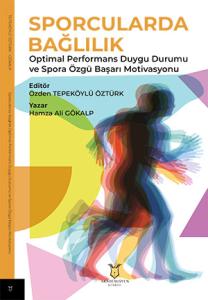
Sporcularda Bağlılık Optimal Performans Duygu Durumu ve Spora Özgü Başarı Motivasyonu
Özet
Bu kitap, sporcularda bağlılık, optimal performans duygu durumu ve spora özgü başarı motivasyonu konularını ele almaktadır. Sporcuların duygusal, fiziksel ve bilişsel gelişimlerini sağlayarak optimal performans göstermelerini amaçlayan araştırmaların yapıldığı spor bilimleri alanında önemli bir değişken olan sporcu bağlılığı kavramı incelenmektedir. Bağlılık, sporcuların belirlenen amaçlar doğrultusunda enerji, adanmışlık, devamlılık ve odaklanma ile hareket etmelerini sağlar. Kitapta ayrıca optimal performans duygu durumu ve spora özgü başarı motivasyonu kavramları da ele alınarak sporcuların bağlılıklarıyla ilişkilendirilmektedir. Bu kitap, sporculara, antrenörlere, yöneticilere ve sporcu yetiştiren eğitmenlere bu kavramları tanıtmayı, bilgi verip desteklemeyi amaçlamaktadır. Kitap, Hamza Ali GÖKALP'in doktora tezinden üretilmiştir ve Akademisyen Kitabevi A.Ş. tarafından yayımlanmıştır.
This book examines the concept of athlete commitment, which is an important variable in the field of sports science that aims to ensure athletes' emotional, physical, and cognitive development for optimal performance. Commitment enables athletes to act with energy, dedication, continuity, and focus towards their set goals. The book also discusses the concepts of optimal performance emotional state and sport-specific achievement motivation, which are related to athletes' commitment. The aim of this book is to introduce, inform, and support these concepts for athletes, coaches, managers, and trainers involved in athlete development. The book is based on Hamza Ali GÖKALP's doctoral thesis and is published by Akademisyen Kitabevi A.Ş.
Referanslar
Abu Bakar R. Understanding factors influencing employee engagement: a study of the financial sector in Malaysia, 2013.
Akbaba S. Eğitimde motivasyon. Kazım Karabekir Eğitim Fakültesi Dergisi, 2006; 15(3), 245-258.
Aktop A. Spora özgü başarı motivasyonu ile psikolojik ve yapısal özellikler arasındaki ilişkinin incelenmesi. Akdeniz Üniversitesi Sağlık Bilimleri Enstitüsü, Yüksek Lisans Tezi (Danışman: Yrd. Doç. Dr. Alparslan Erman). Antalya, 2002.
Allen NJ. Meyer JP. The measurement and antecedents of affective, continuance and normative commitment to organization, J. Occup. Organ. Psychol, 1990; 63, 1-18.
Altıntaş A. Sporcuların zihinsel dayanıklılıklarının belirlenmesinde optimal performans duygu durumu, güdülenme düzeyi ve hedef yöneliminin rolü. Ankara Üniversitesi Sağlık Bilimleri Enstitüsü. Doktora Tezi (Danışman: Doç. Dr. Perican Bayar Koruç). Ankara, 2015.
Ardıç K. ve Polatçı S. Tükenmişlik sendromu ve madalyonun öbür yüzü: İşle bütünleşme. Erciyes Üniversitesi İktisadi ve İdari Bilimler Fakültesi Dergisi. 2009;32, 21-46.
Arık IA. Motivasyon ve heyecana giriş. Çantay Yayınevi: İstanbul; 1996.
Arslanoğlu K. Futbolun psikiyatrisi. İthaki Yayınları: İstanbul; 2005.
Asakawa K. Flow experience and autotelic personality in Japanese college students: How do they experience challenges in daily life? Journal of Happiness Studies. 2004; 5, 123–154.
Aşçı FH. Çağlar E. Eklund RC. Altıntaş A. Jackson S. Durumluk ve sürekli optimal performans duygu durum-2 ölçekleri’nin uyarlama çalısması, Spor Bilimleri Dergisi Hacettepe J. of Sport Sciences, 2007; 18 (4): 182-196.
Aubé C. Brunelle E. Rousseau V. Flow experience and team performance: The role of team goal commitment and information exchange. Motivation and Emotion. 2014;38 (1):120-130.
Aydoğdu C. Şahan A. Erman KA. Genç tenisçilerde spora özgü başarı motivasyon düzeyinin müsabaka performansı üzerine etkisinin incelenmesi, Abant İzzet Baysal Üniversitesi Eğitim Fakültesi Dergisi, 2018; 18(2), 655-666.
Babic, V., Sarac, J., Missoni, S., Sindik, J. Athletic Engagement and Athletic Identity in Top Croatian Sprint Runners. Collegium Antropologicum. 2015; 39(3):521-528.
Bakker A. Oerlemans W. Demerouti E. Bruins Slot B. Karamat Ali D. Flow and performance: A study among talented Dutch soccer players. Psychology of Sport and Exercise, 2011; 12: 442-450.
Bal E. Self-efficacy, contextual factors and well-being: The impact of work engagement. Marmara Üniversitesi Sosyal Bilimler Enstitüsü, Doktora Tezi (Danışman: Prof. Dr. Handan Kepir Sinangil). İstanbul, 2008.
Balay R. Yönetici ve öğretmenlerde örgütsel bağlılık, Nobel Yayın Dağıtım, s.21-32, Ankara, 2000.
Baron RA. Behaviour in organisations. New York: Allyn & Bacon, Inc. 1983.
Barutçugil İ. Stratejik insan kaynakları. İstanbul: Kariyer Yayıncılık. 2004.
Basom MR. ve Frase L. Creating optimal work environments: Exploring teacher flow experiences, Mentoring and Tutoring, 2004, 12: 241-258.
Başer E. Uygulamalı spor psikolojisi. Bağırgan Yayınevi, Ankara, 1998.
Bayraktar B. Kurtoğlu M. Sporda performans, etkili faktörler, değerlendirilmesi ve arttırılması. Klinik Gelişim Dergisi. 2009; Cilt:22/No:1.
Beck RC. Motivation theories and principles, (5th Ed.), 2004; New Jersey: Pearson Prentice Hall.
Bhargav S. Sreenivas M. Motivation factors among elite retired sport persons, Indian Journal of Applied Research, 2017; 7(11), 204-206.
Birkan KC. Çalışanların motivasyonel öncelikleri ve bir motivasyon faktörü olarak liderliğin önemi. İstanbul: İstanbul Üniversitesi Sosyal Bilimler Enstitüsü. 2009.
Bora MV. Beden eğitimi öğretmeni ve sporcu öğrenciler arasındaki iletişimin, sportif başarı motivasyonuyla ilişkisi. Harran Üniversitesi Sağlık Bilimleri Enstitüsü, Yüksek Lisans Tezi (Danışman: Yrd. Doç. Dr. Recep Cengiz). Urfa, 2013.
Bozanoglu İ. Bilişsel davranışçı yaklaşıma dayalı grup rehberliğinin güdülenme, benlik saygısı, başarı ve sınav kaygısı düzeylerine etkisi. Ankara Üniversitesi Eğitim Bilimleri Fakültesi Dergisi, 2005; 38 (1), 17–42.
Brewer BW. Handbook of sport medicine and science, Sport Psychology. 1st ed. UK: Willy- Blackwell; 2009. p.148.
Bruin AB. Rikers RM. Schmidt HG. The influence of achievement motivation and chess-specific motivation on deliberate practice. Journal Sport Exercise Psychology. 2007 29(5):561-583.
Can H. Kamu ve özel kesimde personel yönetimi. Ankara: Siyasal Kitapevi. 1995.
Carpentier J. Mageau GA. Vallerand RJ. Ruminations and flow: Why do people with a more harmonious passion experience higher well-being? Journal of Happiness Studies. 2011;13 (3):1-18.
Chiu LK. Mahat NI. Marzuki NA. Hua KP. Student-athletes’ evaluation of coaches’ coaching competencies and their sport achievement motivation. Review of European Studies. 2014, 6(2); 17-29.
Clark Timothy R. The employee engagement mindset: The six drivers for tapping into the hidden potential of everyone in your company. McGraw Hill Companies, New York, 2012; 53-67.
Clinkenbeard PR. Motivation and gifted student: implications of theory and research, Psychology in the School, 2012; 49(7),1-9.
Cox RH. Sport psychology. Concept and Applications. Second Edition. Wm C. Brown Publishers: 1990.
Creswell JW, Plano Clark VL. Karma yöntem araştırmaları tasarımı ve yürütülmesi. Çeviren: Dede Y, Beşir Demir S, Anı Yayıncılık: Ankara, 2018.
Cropanzano R. Mitchell MS. Social exchange theory: An interdisciplinary review. Journal of management, 2005;31(6), 874-900.
Crust L. Swann C. Comparing two measures of mental toughness. Personality and Individual Differences, 2011;50: 217-221.
Csikszentmihalyi M. Beyond boredom and anxiety. San Francisco: Jossey-Bass. (1975).
Csikszentmihalyi M. Flow: The psychology of optimal experience. New York: Harper & Row Publishers, Inc: 1990.
Csikszentmihalyi M. Akış mutluluk bilimi. Çeviren: Akbaş S.K, HYB Yayıncılık: Ankara, 2005.
Curran T, Hill AP. Hall HK. Jowett GE. Relationships between the coach-created motivational climate and athlete engagement in youth sport. Journal of Sport & Exercise Psychology, 2015; 37, 193- 198.
Cüceloğlu D. İnsan ve davranışı. Remzi Kitapevi, İstanbul: 1996.
Cüceloğlu D. İnsan ve davranışı. (12.Basım). Remzi Kitabevi, İstanbul: 2003.
Çağlar E. Sarı İ. Aşçı FH. Jackson S. Eklund R. The short versions of flow scales: Reliability and validity study. III. International Exercise And Sport Psychology Congress, 23-25 October, İstanbul; 2015.
Çakıroğlu T. Antrenör-Sporcu ilişkileri ve başarıda spor psikolojisinin önemi. Gazi Üniversitesi Sosyal Bilimler Enstitüsü, Yüksek Lisans Tezi (Danışman: Doç Dr. Gaye İspir). Ankara, 1987.
Çapacıoğlu N. Durmaz A. Gegen E. Özbal AF. Beden eğı̇tı̇mı̇ ve spor yüksekokulu öğrencı̇lerı̇nı̇n sporcu bağlılık düzeylerı̇nı̇n incelenmesı̇, 2. Beden Eğitimi Spor Rekreasyon ve Dans Kongresi. 2019.
Çöl G. Güçlendirme ve örgütsel bağlılık ilişkisi üzerine bir araştırma, Gebze İleri Teknoloji Üniversitesi Sosyal Bilimler Enstitüsü, Doktora Tezi (Danışman: Doç. Dr. Adnan Ceylan). Gebze, 2004.
Çöl G. Örgütsel bağlılık kavramı ve benzer kavramlarla ilişkisi. İşgüç Dergisi, 2003; 6 (2), 4-11.
Dalay G. The relationship between the variables of organizational trust. Job engagement, organizational commitment and job involvement. Marmara Üniversitesi Sosyal Bilimler Enstitüsü, Yüksek Lisans Tezi (Danışman: Yrd. Doç. Dr. Alev Torun). İstanbul, 2007.
Deci EL. Effects of externally mediated rewards on intrinsic motivation. Journal of Personality and Social Psycology, 1972; Volume 18, No 1, ss. 105-115.
Deci EL. Ryan RM. The emprical exploration of intrinsic motivationel processes. In L. Berkowits (Ed.) Advances in Experimental Social Psychology, New York: Academic Press, 1985; Vol. 13, s.39-80.
Deci EL. Pelletier LG. Ryan RM. & Vallerand RJ. Motivation and education: The self determination rerspective. Educational Psychologist, 1991; 26 (3,4), 325-346.
DeCottis TA. Summers TP. A path analysis of organizational commitment, Human Relations, 1987; Vol:40, No:7, pp.445-470.
De Francisco C. Arce C. Grana M. Preliminary validation of a Spanish version of the athlete engagement questionnaire (AEQ). Journal of Sport Psychology, 2017; 26(4), 22-27.
DeFreese JD. Smith AL. Teammate social support, burnout and self-determined motivation in collegiate athletes. Psychology of Sport and Exercise, 2013; 14, 258-265.
Demir GT. Cicioğlu Hİ. Fiziksel aktiviteye katılım Motivasyonu ölçeği (FAKMÖ) geçerlilik ve güvenirlilik çalışması, Journal of Human Sciences, 2018; 15(4), 2479-2492.
Demirdöken Ç. Yaylacı ST. Yağar G. Deryahanoğlu G. Ünlü EA. The examination of engagement levels of university students studying at the faculty of sports sciences. European Journal of Physical Education and Sport Science. 2019; 5(8), 60-67.
Diener E. What is positive about positive psychology: The curmudgeon and Pollyanna. Psychological Inquiry, 2003; 14(2), 115-120.
Doğan O. Spor psikolojisi, (İkinci Basım), Nobel Kitabevi, Adana: 2005.
Donner E. ve Csikszentmihalyi M. Transforming stress to flow. Executive Excellence, 1992, 9, 16-17.
Dörnyei Z. Teaching and Researching Motivation. Longman, Essex. 2001.
Duda JL. ve Nicholls JG. Dimensions of achievement motivation in schoolwork and sport. Journal of Educational Psychology, 1992, 84(3), 290–299.
Durand-Bush N. Salmela J. The development and maintenance of expert athletic performance: Perceptions of world and olympic champions. Journal of Applied Sport Psychology. 2002; 14(3), 154-171.
Ercan L. Motivasyon-güdülenme, sınıf yönetiminde yeni yaklaşımlar. Nobel Yayın Dağıtım, Ankara: 2001.
Eren E. Yönetim ve organizasyon. Beta Basım Yayım Dağıtım, İstanbul: 1996.
Ergül HF. Motivasyon ve motivasyon teknikleri. Elektronik Sosyal Bilimler Dergisi. 2005; 4(14), 67-79.
Ertemli HB. İş aile ve aile iş çatışmalarının işe cezbolma üzerindeki etkisine yönelik bir uygulama. Yıldız Teknik Üniversitesi Sosyal Bilimler Enstitüsü, Yüksek Lisans Tezi (Danışman: Yrd. Doç. Dr. Şule Çerik). İstanbul, 2011.
Evdoxia K, Miltiadis P. Evgenia G. Physical self worth, athletic engagement and goal orientations in Greek female athlates. Pamukkale Journal of Sport Sciences. 2013; Vol.4, No.2, Pg:79-93.
Funk DC. Toohey K. Bruun T. International sport event participation: prior sport involvement; destination image; and travel motives, European Sport Management Quarterly, 2007:7(3),227-248.
Gagné M. Deci EL. Self-determination theory and work motivation. Journal of Organizational Behavior. 2005 26, 331-362.
Gallup P. State of the global workplace: Employment engagement insights for business leaders worldwide. 2013.
Gano-Overway LA. ve Duda JL. Personal theories of achievement motivation among African and White mainstream American athletes. International Journal of Sport Psychology 2001; 32(4), 335–354.
George S. Motivasyon mucizesi. Çeviren: Kaplan U. Sistem Yayıncılık, İstanbul: s: 10-11. 1997.
Goffman E. Encounters: Two studies in the sociology of interaction. 1961.
González-Romá V. Schaufeli WB. Bakker AB. Lloret S. Burnout and work engagement: Independent factors or opposite poles? Journal of Vocational Behavior, 2006;68(1), 165-174.
Gould D. Sport psychology in the new millennium: The psychology of athletic excellence and beyond. Journal of Applied Sport Psychology, 2002; 14(3), 137-139.
Gökalp HA. Tepeköylü Öztürk Ö. Soytürk M. Sporcu bağlılık ölçeği’nin 14-18 yaş arası sporcularda geçerlik ve güvenirlik çalışması. 18. Spor Bilimleri Kongresi - Online (7-9 Kasım) Özet Metin Kitabı. 2020, 465-466.
Gökalp HA. Sporcularda bağlılık; Sürekli optimal performans duygu durumu ve spora özgü başarı motivasyonuyla ilişkisi ve metaforik algılar. Manisa Celal Bayar Üniversitesi Sağlık Bilimleri Enstitüsü, Doktora Tezi (Danışman: Dr. Öğr. Üyesi Gökhan Çobanoğlu). Manisa, 2021.
Greenleaf C. Gould D. Dieffenbach K. Factors influencing olympic performance: Interviews with Atlanta and Negano US olympians. Journal of Applied Sport Psychology. 2001; 13(2), 154-184.
Guillen F. Martinez Alvarado, JR. The sport engagement scale: An adaptation of the Utrecht work engagement scale (UWES) for the sports environment. Universitas Psychologica, 2014; 13(3), 975-984.
Gümüş S. Sezgin B. Motivasyonun örgütsel bağlılığa ve performansa etkisi. İstanbul: Hiperlink Yayınları. 2012.
Güneşer AB. The effect of person-organizatıon fit on organizational commitment and work engagement: The role of person supervisor fit, Marmara Üniversitesi Sosyal Bilimler Enstitüsü, Yüksek Lisans Tezi (Danışman: Prof. Dr. İnci Erdem Artan). İstanbul, 2007.
Gürbüz S. Örgütsel vatandaşlık davranışı ile duygusal bağlılık arasındaki ilişkilerin belirlenmesine yönelik bir araştırma, Ekonomik ve Sosyal Araştırmaları Dergisi, 2006; 3 (1), 48-75.
Gürşimsek I. Öğretmen adaylarında öğrenmeye ilişkin motivasyonel inançlarve strateji kullanımı. Muğla Üniversitesi Sosyal Bilimler Enstitüsü Dergisi, 2002; 8, 135- 155.
Han S. The relationship between life satisfaction and flow in elderly Korean immigrants. In M. Csikszentmihalyi, & I. S. Csikszentmihalyi (Eds.), Optimal experience: Psychological studies of flow in consciousness, New York: Cambridge University Press., 1988, p. 138-149.
Hanrahan S. Cerin E. Gender level of participation and type of sport: Differences in achievement goal orientation and attributional style. Journal of Science and Medicine in Sport, 2009;12, 508-512.
Harter JK. Schmidt FL. Hayes TL. Business-unit-level relationship between employee satisfaction, employee engagement, and business outcomes: A meta-analysis. Journal of Applied Psychology, 2002;87(2), 268-279.
Haugaasen, M., Toering, T., Jordet, G. From childhood to senior professional football: a multi-level approach to elite youth football players’ engagement in football-spesific activities. Psychology Of Sport And Exercise, 2014; 15, 336-344.
Hayashi CT. Achievement motivation among anglo American and Hawaiian psysical activity participants; Individual differences and social contextual factors. Journal of Sport and Exercise Psychology, 1996; 18(2), 194-215.
Haque MF. Haque MA. Islam S. Motivational theories – A critical analysis. ASA University Review. 2004; 60-68.
Hodge K. Lonsdale C. Jackson SA. Athlete engagement in elite sport: An exploratory investigation of antecedents and consequences. The Sport Psychologist, 2009; 23(2), 186-202.
Hoşman OY. Tenisçilerin spora özgü başarı motivasyon ve benlik saygısı düzeylerinin karşılaştırılması. Selçuk Üniversitesi Sağlık Bilimleri Enstitüsü, Doktora Tezi (Danışman: Prof. Dr. Mehmet Kılıç). Konya, 2018.
Hsieh T. We—How to increase performance and profits through engagement. New Jersey: John Wiley and Sons Inc: 2011.
Igbaria M. Guimaraes T. Antecedents and consequences of job satisfaction among information center employees. Journal of Management Information Systems, 1993;9(4), 145-174.
İkizler C. Sporda başarının psikolojisi. (1.Baskı). Alfa BasımYayın Dağıtım, İstanbul: 1993.
İkizler HC. Sporda başarıyı etkileyen psikolojik faktörler. Alfa Basım Yayın, İstanbul, 1994.
İkizler HC. Karagözoğlu C. Sporda başarının psikolojisi. Alfa Basım Yayın Dağıtım, İstanbul: 1997.
Jackman P, Van Hout MC, Lane A, Fitzpatrick G. Experiences of flow in jockeys during flat-race conditions. International Journal of Sport and Exercise Psychology, 2014; 13,3: 205-223.
Jackson S. Athletes in flow: A qulitative investigation of flow states in elite figure skaters. Jurnal of Applied Sport Psychology, 1992; (4): 161-180.
Jackson S. Faktors incfluancing the occurence of flow state in elite athles. Journal of Applied Sport Psylologys, 1995; (7): 138, 166.
Jackson SA. Eklund RC. The flow scales manual. Morgantown, WV: Fitness Information Technology Inc: 2004.
Jackson SA. Kimiecik JC. Ford SK. Marsh HW. Psychological correlates of flow in sport. Journal of Sport and Exercise Psychology, 1998; 20: 358-378.
Jackson SA. Marsh HW. Development and validation of a scale to measure optimal experience: The Flow State Scale. Journal of Sport & Exercise Psychology, 1996; 18: 17–35.
Jackson SA. Thomas PR. Marsh HW. Smethurst CS. Relationships between flow, self-concept, psychological skills, and performance, Journal Of Applied Sport Psychology, 2001; 13(2): 129-153.
Jackson SA. ve Roberts GC. Positive performance states of athletes: Toward a conceptual understanding of peak performance. The Sport Psychologist, 1992, 6: 156-171.
Kahn WA. Psychological conditions of personal engagement and disengagement at work. Academy of Management Journal, 1990;33(4), 692-724.
Kahn WA. To be fully there: Psychological presence at work. Human Relations, 1992; 45(4), 321-349.
Kalaycı Ş. SPSS Uygulamalı çok değişkenli istatistik teknikleri. 3.Basım. Asil Yayın Dağıtım: Ankara; (2008).
Kanten P. İşgörenlerde işe adanmanın ve proaktif davranışların oluşumunda örgütsel güven ile örgütsel özdeşleşmenin rolü. Süleyman Demirel Üniversitesi Sosyal Bilimler Enstitüsü, Doktora Tezi (Danışman: Prof. Dr. Hasan İbicioğlu). Isparta, 2012.
Kampfe A. Höner O. Willimczik K. Multiplicity and development of achievement motivation: A comparative study between German elite athletes with and without a disability. European Journal of Adapted Physical Activity. 2014, 7(1); 32-48.
Karaman MA. Smith R. Turkish adaptation of achievement motivation measure. International Journal of Progressive Education, 2019; 15(5), 185-197.
Kaya FŞ. Yıldız B. Yıldız H. Herzberg’in çift faktör kuramı açısından ilköğretim 1. kademe öğretmenlerinin motivasyon düzeylerinin değerlendirilmesi, Akademik Bakış Dergisi, 2013; 39, 1-18.
Kayhan R. Bardakçı S. Caz Ç. Spora bağlılık ölçeği’nin Türkçe’ye uyarlama çalışması. İnsan ve Toplum Bilimleri Araştırmaları Dergisi, 2020; 9 (3), 2905-2922.
Kazak Z. Sporda güdülenme ölçeği –SGÖ-‘nin Türk sporcular için güvenirlik ve geçerlik çalışması, Hacettepe Spor Bilimleri Dergisi, 2004; cilt.15, sayı.4:191-206.
Kelecek S. Sporcuların tutkunluk düzeylerinin; optimal performans duygu durumu, güdüsel yönelim ve hedef yönelimini belirlemedeki rolü. Başkent Üniversitesi Sağlık Bilimleri Enstitüsü, Yüksek Lisans Tezi (Danışman: Prof. Dr. Fevziye Hülya Aşçı). Ankara, 2013.
Kelecek S. Kara FM. Aşçı FH. Reliability and validity of “Athlete Engagement Questionnaire” (Sporcu Bağlılık Ölçeği’nin Geçerlik ve Güvenirlik Çalışması). Spormetre, 2018; 16(3), 39 47.
Kelecek S. Koruç Z. Futbolcuların güdüsel yönelim ve spora bağlılık düzeylerinin sporcu tükenmişliğini belirlemedeki rolü. Başkent Üniversitesi Sağlık Bilimleri Fakültesi Dergisi, 2018; 2(2), 102-116.
Kelecek S. Göktürk E. Kadın futbolcularda sporcu bağlılığının sporcu tükenmişliğini belirlemedeki rolü. Başkent Üniversitesi Sağlık Bilimleri Fakültesi Dergisi, 2017; 2(2), 162-173.
Kermally S. Gurus on people management. London: Thorogod Publishing. 2004.
Kimiecik JC. Harris AT. What is enjoyment? A conceptual/definitional analysis with implications for sport and exercise psychology. Journal of Sport and Exercise Psychology, 1996; 18(3), 247–263.
Kivikangas JM. Psychophysiology of flow experience: An explorative study, Department of Psychology, University of Helsinki, Master’s thesis. 2006.
Koçel T. İşletme yöneticiliği: Yönetim ve organizasyon, organizasyonlarda davranış, klasik-modern-çağdaş yaklaşımlar. İstanbul: Beta Basım Yayın. 1999.
Koçel T. İşletme yöneticiliği. Beta Yayınları. İstanbul; 2003.
Konter E. Spor psikolojisi uygulamalarında yanılgılar ve gerçekler. Dokuz Eylül Yayınları, s.7-37, İzmir; 2003.
Konter E. Sporda motivasyon. Saray Yayınları, İzmir; 1995.
Konter E. Spor psikolojisi el kitabı. 6. Baskı. Ankara: Nobel Yayıncılık; p.84, 2006.
Kowal J. ve Fortier MS. Motivational determinants of flow: Contributions from self-determination theory, The Journal of Social Psychology, 1999, 139 (3): 355-368.
Krane V. Williams JM. Psychological characteristics of peak performance. In: Williams JM, ed. Applied Sport Psychology: Personal Growth Peak Performance. 6th ed. Boston: McGraw-Hill; 2010. p.169-220.
Kristensen JA. Motivation and athlete engagement. A cross-sectional study in youth ice hockey players. Norwegian School of Sport Sciences, Department of Coaching and Psychology, Master’s thesis. (2013).
Kruse K. Employee engagement 2.0: How to motivate your team for high performance: a " real-world" Guide for Busy Managers. 2015.
Kumar R. Zusho A. Bondie R. Weaving cultural relevance and achievement motivation into inclusive classroom cultures, Educational Psychologist, 2018; 53(2), 78-96.
Kurt M. Temelli A. Biyoloji eğitiminde çoklu zeka kuramı ve motivasyon stilleri (Canlıların sınıflandırılması ve biyolojik çeşitlilik ünitesi), Ağrı İbrahim Çeçen Üniversitesi Yayınları. 2013.
Lepper MR. Grene D. Nisbett RE. Determining children’s interest with extrinsic rewards: A test of the “Over justification Effect”. Journal of Personality and Social Psychology, 1973; 28, 129-137.
Lewis JA. Lewis MD. Packard T. Souflee F. Management of human service programs. Belmont: Brooks/Cole. 2001.
Livvarçin Ö. Kurt D. Yönetim biliminde 49 insan 49 teori. Beta Yayınları. İstanbul. 2012.
Lo YC. A study of innovative leisure sports concept the influence of triathlon leisure fit and flow experience on happiness: Flow experience as a mediator. The International Journal of Organizational Innovation. 2017;10: (1):318-336.
Lockwood NR. Leveraging employee engagement for competitive advantage. Society for Human Resource Management Research Quarterly, 2007;1, 1-12.
Loehr JE. Schwartz T. On form: Managing energy, not time, is the key to high performance, Health and Happiness. Nicholas Brealey. 2003.
Londsdale C, Hodge K, Rose E. Athlete burnout in elite sport: A self-determination perspective. Journal of Sport Sciences, 2009; 27(8), 785-795.
Lonsdale C. Hodge K. Raedeke TD. Athlete engagement: I. A qualitative investigation of relevance and dimentions. International Journal of Sport Psychology, 2007a; 38, 451-470.
Lonsdale C. Hodge K. Jackson SA. Athlete engagement: II. development and initial validation of the athlete engagement questionnaire. International Journal of Sport Psychology, 2007b; 38(4), 471-492.
Lunenburg FC. Ornstein AC. Educational administration concepts an practice. California: Wadsworth Publishing Company. 1991.
Luzio SS. Martinent G. Guillet-Descas E. Daigle MP. Exploring the role of sport sense of community in perceived athlete burnout, sport motivation, and engagement, Journal of Applied Sport Psychology. 2019, 32(5); 513-528.
Macey WH. Schneider B. The meaning of employee engagement. Industrial and Organizational Psychology, 2008;1(1), 3-30.
Marciano P. Carrots and sticks don't work: Build a culture of employee engagement with the principles of RESPECT. McGraw Hill Professional. 2010.
Martins P. Rosado A. Ferreira V. Examining the validity of the athlete engagement questionnaire (AEQ) in a Portuguese sport setting. MOTRIZ, RIO CARLO, 2014; 20(1), 1-7.
Maslach C. Leiter MP. The truth about burnout: How organizations cause personal stress and what to do about it. San Francisco. John Wiley & Sons, Inc. 1997.
Maslach C. Schaufeli WB. Leiter MP. Job burnout. Annual Review Of Psychology, 2001;52(1), 397-422.
May DR. Gilson RL. Harter LM. The psychological conditions of meaningfulness, safety and availability and the engagement of the human spiritat work. Journal of Occupational and Organizational Psychology, 2004;77(1), 11-37.
Meyer JP. Allen NJ. A three-component conceptualization of organizational commitment, Human Resources Management Review, 1991; Vol:1, pp.61-89.
Meyer JP. Allen NJ. Commitment in workplace, theory, research and application, London, Sage Publications, 1997; 91-125.
Mihailescu L. Haralambie A. Mihailescu LE. Mihailescu N. Determining the motivations features formative stages athletics, Gymnasium Scientific Journal of Education, Sport and Health, 2017; 12(1),1-10.
Miles MB. & Huberman AM. Qualitative data analysis: An expanded Sourcebook. (2nd ed). Thousand Oaks, CA: Sage. 1994.
Moneta GB. The flow model of intrinsic motivation in Chinese: Cultural and personal. Journal of Happiness Studies. 2004b, 5;181-217.
Morgan G. Paradigms, metaphors and puzzle solving in organization theory, Administrative Science Quarterly, 1980; 25, 605-622.
Mowday RT. Porter LW. Steers RM. Employee-Organization linkages: The psychology of commitment, absenteeism and turnover, New York, Academic Press. In Reichers, A.E.A Revicev and Reconceptualization of Organizational Commitment, Academy of Management Review, 1982; Vol:10, No:3, pp.465-476.
Mungan S. Sporda motivasyon faktörü olarak ödül ve ceza. Marmara Üniversitesi Sağlık Bilimleri Enstitüsü, Yüksek Lisans Tezi (Danışman: Prof. Dr. Ali Osman Özcan). İstanbul, 1995.
Murcia JAM. Gimeno EC. Coll DGC. Relationships among goal orientations, motivational climate and flow in adolescent athletes: Differences by gender. The Spanish Journal of Psychology. 2008, 11(1);181-191.
Myers DG. The funds, friends, and faith of happy people. American psychologist, 2000;55(1), 56.
Nakamura J. Csikszentmihalyi M. The concept of flow. In Flow and the foundations of positive psychology. 2014, Springer, Dordrecht, s.239-263.
Nakamura J. Csikszentmihalyi M. The concept of flow. In C. R. Snyder & S. J. Lopez (Eds.), Handbook of positive psychology New York: Oxford University Press, 2002; p. 89-105.
Newmann FM. Wehlage GG. & Lamborn SD. The significance and sources of student engagement. In F. M. Newmann (Eds.). Student engagement and achievement in American schools (pp.11-39). New York: Teachers College Press. 1992.
Oliver N. Rewards, investments, alternatives and organizational commitment: Empirical evidence and theoretical development. J. Occup. Psychol, 1990: 63, 19-31.
Onur B. Gelişim psikolojisi: Yetişkinlik, yaşlılık, ölüm, 5. Baskı. İmge Kitapevi, Ankara; 2000.
Önen SM. Kanayran HG. Liderlik ve motivasyon: Kuramsal bir değerlendirme. Birey ve Toplum, 2015; 43-63.
Öner ZH. The Mediating effect of organizational justice: Moderating roles of sense of coherence and job complexity on the relationship between servant leadership, and work engagement. Marmara Üniversitesi Sosyal Bilimler Enstitüsü, Doktora Tezi (Danışman: Aysun Tülay Bozkurt). İstanbul, 2008.
Özcan HM. Argan M. Tüketiciyle online (Çevrimiçi) bağ kurma ile sadakat ve yeniden satın alma niyeti arasındaki ilişki: Facebook örneği. Tüketici ve Tüketim Araştırmaları Dergisi, 2014; 6 (1), 51-82.
Özdaşlı K. Akman H. İçsel ve dışsal motivasyonda cinsiyet ve örgütsel statü farklılaşması: Türk Telekominikasyon A.Ş. çalışanları üzerinde bir araştırma. Süleyman Demirel Üniversitesi Vizyoner Dergisi, 2012; 4(7). s.73-81.
Özşahin N. Lise öğrencilerinin günlük yaşamdaki akış deneyimlerinin incelenmesi, Ankara Üniversitesi Eğitim Bilimleri Enstitüsü, Yüksek LisansTezi (Danışman: Yrd. Doç. Dr. Müge Artar). Ankara, 2003.
Pelletier LG. Fortier MS. Vallerand RJ. Tuson KM. Briere NM. Blais MR. Toward a new measure of intrinsic motivation scale (sms). Journal of Sport and Exercise Psychology. 1995; 17, 2, 35-53.
Perrin T. The 2003 towers perrin talent report: Working today: Understanding what drives employee engagement. 2003.
Phillips LL. Examining flow states and motivational perspectives of ashtanga yoga practitioners. University of Kentucky Doctoral Dissertations, 2005; 3- 36.
Pink DH. Drive: A whole new mind. New York, NY: Riverhead Books. 2009.
Pintrich PR. & De Groot EV. Motivational and self-regulated learning components of classroom academic performance. Journal of Educational Psychology, 1990; 82(1), 33–40.
Pol PKC. & Kavussanu M. Achievement motivation across training and competition in individual and team sports. Sport, Exercise, and Performance Psychology,2012, 1(2), 91–105.
Pynes JE. Human resources management for public and monprofit organizations. San Francisco: Jossey-Bass. 2013.
Rejeski WJ, Brawley LR. Defining the boundaries of sport psychology. Sport Psychologist 1988;2(3):231-242.
Rich BL. Job engagement: Construct validation and relationships with jobsatisfaction, job involvement, and intrinsic motivation. ProQuest. 2006.
Roberts GC. Motivation in sport and exercise, conceptual constrains and convergence., İllinois: Human Kinetics Boks Campaign. 1992.
Roberts GC. Treasure DC. Conroy DE. Understanding the dynamics of motivation in sport and physical activity: An achievement goal interpretation. In G. Tenenbaum & R. C. Eklund (Ed.), Handbook of Sport Psychology, Third Edition, John Wiley & Sons, p. 3-10. 2007.
Robert Z. Rogers A. Thomas CL. Spitzmueller C. Effects of proactive personality and conscientiousness on training motivation. International Journal of Training and Development, 2018; 22(2), 126-143.
Robinson D. Perryman S. Hayday S. The drivers of employee engagement. Report-Institute for Employment Studies. 2004.
Rogatko TP. The influence of flow on positive affect in college students. Journal of Happiness Studies. 2009;10 (2):133-148.
Rothbard NP. Enriching or depleting? The dynamics of engagement in work and family roles. Administrative Science Quarterly, 2001; 46(4), 655-684.
Ryan RM. Deci EL. Intrinsic and extrinsic motivations: Classic definitions and new directions. Contemporary Educational Psychology. 2000; 54-67.
Sackmann S. The role of metaphors in organization transformation. Human Relations, 1989; 42, 463-485.
Sakovska M. Importance of employee engagement in business environment: Measuring the engagement level of administrative personnel in VUC Aarhus and detecting factors requiring improvement. Published thesis, Aarhus University. 2012.
Saks AM. Antecedents and consequences of employee engagement. Journal of managerial psychology, 2006;21(7), 600-619.
Scanlan TK. Chow Graig M. Sousa C. Scanlan LA. The development of the sport commintment questionnaire-2. Journal of Sport & Exercise Psychology, 2016; 22, 233-246.
Schaufeli W. Salanova M. Work engagement: On how to better catch aslippery concept. European Journal of Work and Organizational Psychology, 2011;20(1), 39-46.
Schaufeli WB. Salanova M. Gonzalez-Roma V. Bakker AB. The measurement of engagement and burnout: a two sample confirmatory fator analytic approach. Journal of Happiness Studies, 2002; 3, 71-92.
Schaufeli WB. Taris TW. Bakker AB. Dr Jekyll or Mr Hyde? On the differences between work engagement and workaholism. Research Companionto Working Time And Work Addiction, 2006; 193-217.
Sekaran U. Research methods for business, Canada: John Wiley ve Sons, Inc. 1992.
Seligman MEP, Csikszentmihalyi M. Positive psychology: An introduction. American Psychologist, 2000; 55(1), 5-14.
Semerci Ç. Başarı Odaklı Motivasyon (BOM) Ölçeği’nin Geliştirilmesi. E-Journal of New World Sciences Academy. 2010; 5(4): 2123- 2133.
Shuck B. Wollard K. Employee engagement and HRD: A seminal review of the foundations. Human Resource Development Review, 2010;9(1), 89-110.
Sivrikaya MH. Biricik YS. Milli takım düzeyindeki elit kayakçıların sporcu bağlılık düzeylerinin incelenmesi, 2. Uluslararası Rekreasyon ve Spor Yönetimi Kongresi. 2019.
Smith RL. Karaman MA. Balkin RS. & Talwar S. Psychometric properties and factor analysis of the Achievement Motivation Measure. British Journal of Guidance and Counselling. 2019. https://doi.org/10.1080/03069885.2019.1620173
Sücüllü U. Spora bağlılık ölçeğinin Türkçeye uyarlanması ve geçerlik güvenirlik çalışması. Pamukkale Üniversitesi Eğitim Bilimleri Enstitüsü. Yüksek Lisans Tezi (Danışman: Prof. Dr. Bülent Ağbuğa). Denizli, 2019.
Swann C. Keegan RJ. Piggott D. Crust LA. Systematic review of the experience, occurrence, and controllability of flow states in elite sport. Psychology of Sport and Exercise, 2012; 13, 6: 807–819.
Swann C. Flow in Sports, In L. Harmat, F. Orsted. Andersen, F. Ullen, J. Wright & G. Sadlo (Eds.), Flow experience: Empirical research and applications, Switzerland: Springer International Publishing. 2016; 51-64.
Terzioğlu AE. Spor eğitiminde motivasyon kavramı. Atatürk Eğitim Fakültesi Spor Bilimleri Dergisi, 1992; 1(2), 11–13.
Tiryaki Ş. Gödelek E. Spora özgü başarı motivasyonu ölçeğinin Türk sporcuları için uyarlanması çalışması. Bağırgan Yayınevi. Ankara; 1997.
Tiryaki S. Spor psikolojisi. Eylül Kitap ve Yayınevi. Ankara; 2000.
Turhan M. Profesyonel futbolcularda depresyon düzeyi, anksiyete düzeyi ve kişilik özellikleri ile sporda başarı motivasyonu arasındaki ilişkinin incelenmesi. Maltepe Üniversitesi Sosyal Bilimler Enstitüsü, Yüksek Lisans Tezi (Danışman: Prof. Dr. Nazan Aydın). İstanbul, 2009.
Türkmen M. Profesyonel erkek futbolcular ile amatör erkek futbolcuların başarı motivasyon düzeylerinin incelenmesi (İzmir-Manisa Örneği). Manisa Celal Bayar Üniversitesi Sağlık Bilimleri Enstitüsü, Yüksek Lisans Tezi (Danışman: Yrd. Doç. Dr. Nevzat Mutlutürk). Manisa, 2005.
Ünal ZM. The contribution of person-organization fit to employee engagement. Marmara Üniversitesi Sosyal Bilimler Enstitüsü, Yüksek Lisans Tezi (Danışman: Doç. Dr. Tülay Turgut). İstanbul, 2013.
Vallerand RJ. Pelletier LG. Blais MR. Biere NM. Senecal C. & Valleries EF. The Academic Motivation Scale: A measure of intrinsic, extrinsic and amotivation in education. Educational Psychological Measurement, 1992; 52, 1003-1017.
Van Scotter JR. Motowidlo SJ. Interpersonal facilitation and job dedication as separate facets of contextual performance. Journal of Applied Psychology, 1996;81(5), 525.
Venugopalan O. Maslow's theory of motivation its relevance and application amongnon-managerial employees of selected public and private sector undertakings in Kerala. Calicut: Department of Commerce & Management Studies. 2007.
Vlachopoulos SP. Karageorghıs CI. Terry PC. Hierarchical confirrmatory factor analysis of the flow state scale an exercise, Journal Of Sports Sciences, 2000; 18: 815-823.
Vokić NP. Hernaus T. The triad of job satisfaction, work engagement and employee loyalty–The interplay among the concepts. Entrepreneurial Society: Current Trends and Future Prospects in Entrepreneurship, Organization and Management, 120. 2015.
Webb JT. Meckstroth MS. Tolan SS. Guiding teh gifted child. Arizona. Gifted Psychology Press, 1994; 64–65.
Wefald AJ. Downey RG. Construct dimensionality of engagement and its relation with satisfaction. The Journal of Psychology, 2009; 143(1), 91-112.
Wegner M. Schüler J. The implicit achievement motive and general life stress affect time spent on competitive matches in racquet sports. In C. Mohiyeddini (Ed.), Psychology of emotions, motivations and actions. Contemporary topics and trends in the psychology of sports. Nova Science Publishers. 2014; 153–175.
Weinbach RW. The social worker as manager: A practical guide to success. Boston: Allyn and Bacon. 1998.
Weinberg RS. Gould D. Foundation of sport and exercise psychology. USA: Human Kitenics Books Champaign. 1995.
Weinberg RS. Gould D. Introduction to psychological skills training. foundation of sport and exercise psychology. 3rd ed. USA: Human Kinetics; 2003. p.p.241-62.
Weinberg RS. Gould D. Foundations of sport and exercise psychology. Human Kinetic, 2011; 148-154.
Weinstein C. & Mayer R. The teaching of learning strategies. Handbook of research on teaching and learning New York: Mc Millian, 1986; 3, 315-317.
Wexley KN. Yukl GA. Organizational behavior and industrial psychology. California: Oxford University Press. 2008.
Whan C. Leveraging GARP to ensure employee engagement. Information Management, 2011; 45(6), 32.
Wildermuth C. Engaged to serve: The relationship between employee engagement and the personality of human services professionals and para professionals. 2008.
Wilson KA. Survey of employee engagement. Doctoral dissertation, University of Missouri, Columbia. 2009.
Willis JD. Three scales to measure competition-related motives in sport. Journal of Sport Psychology, 1982; 4(4), 338-353.
Wu X. Intrinsic motivation and young language learners: The impact of the class, 20. Room Environment. System, 2003; 31, 501–517.
Yaylacı SA. Spor bilimleri fakültesinde okuyan üniversite öğrencilerinin sporcu bağlılık düzeyleri, 2. Uluslararası Herkes İçin Spor ve Wellness Kongresi. 2019.
Yıldırım A. Şimşek H. Sosyal bilimlerde nitel araştırma yöntemleri, 10. Baskı, Seçkin Yayıncılık. Ankara: 2016.
Yılmaz G. İşe bağlanma. A, Keser. G. Yılmaz ve S. Yürür (Editörler.), Çalışma yaşamında davranış: Güncel yaklaşımlar içinde. Umuttepe Yayınları. Kocaeli: 109-135, 2012.
Yüksel Ö. İnsan kaynakları yönetimi. Ankara: Gazi Üniversitesi. 1997.
Zuber C. & Conzelmann A. The impact of the achievement motive on athletic performance in adolescent football players, European Journal of Sport Science, 2014, 14:5, 475-483.
Yayınlanan
Lisans
LisansBu İnternet Sitesi içeriğinde yer alan tüm eserler (yazı, resim, görüntü, fotoğraf, video, müzik vb.) Akademisyen Kitabevine ait olup, 5846 sayılı Fikir ve Sanat Eserleri Kanunu ve 5237 sayılı Türk Ceca Kanunu kapsamında korunmaktadır. Bu hakları ihlal eden kişiler, 5846 sayılı Fikir ve Sanat eserleri Kanunu ve 5237 sayılı Türk Ceza Kanununda yer alan hukuki ve cezai yaptırımlara tabi olurlar. Yayınevi ilgili yasal yollara başvurma hakkına sahiptir.