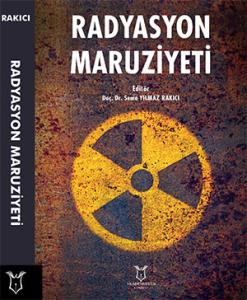
Nükleer Tıpta Hastanın Maruz Kaldığı Radyasyon ve Radyasyondan Korunma
Özet
Nükleer tıp uygulamalarında hastaların ve yakınlarının radyasyondan korunması, tanı ve tedavi süreçlerinin en kritik bileşenlerinden biridir. Nükleer tıp, radyofarmasötiklerin doğrudan hastaya verilmesiyle hastayı geçici bir radyasyon kaynağı haline getirdiği için optimizasyon (ALARA) prensibinin titizlikle uygulanmasını gerektirir. Ulusal ve uluslararası standartlar uyarınca, halk için yıllık maruziyet sınırı 1 mSv olarak belirlenmiş olsa da, tedavi gören hastaların yakınları için bu limitler yetişkinlerde 3-5 mSv, 60 yaş üstünde ise 15 mSv'e kadar esnetilebilmektedir. Radyasyondan korunmada mesafe, zaman ve zırhlama temel yöntemler olup; radyoaktif kaynağın enerjisine uygun önlemler alınmalıdır. Tanısal amaçlı kullanılan Tc-99m, F-18 gibi kısa yarı ömürlü izotoplarda hastaların bol sıvı tüketmesi ve mesanelerini sık boşaltması kontaminasyonu azaltmak için yeterliyken; I-131, Lu-177 gibi yüksek dozlu terapötik uygulamalarda hastaların özel kurşun kaplı odalarda izole edilmesi yasal bir zorunluluktur. Tedavi sonrasında tükürük bezleri, böbrekler ve kemik iliği gibi risk altındaki kritik organları korumak adına hidrasyon, soğuk kompres ve dozimetrik yaklaşımlar büyük önem taşır. Özellikle gebeler ve 18 yaş altı çocuklar radyasyona karşı en hassas grubu oluşturduğundan, bu bireylerin radyoaktif alanlardan ve hastalardan mutlak surette uzak tutulması gerekmektedir.
Radiation protection in nuclear medicine is a cornerstone of diagnostic and therapeutic procedures, as the direct administration of radiopharmaceuticals temporarily turns patients into radiation sources. Adhering to the ALARA principle, ensuring the lowest possible dose is vital to minimize undesirable stochastic and deterministic biological effects. While the annual public dose limit is established at 1 mSv, regulatory bodies like TAEK allow acceptable thresholds up to 3 mSv for caregivers, and higher limits for elderly relatives. The core strategies of protection rely on time minimization, distance maximization, and appropriate shielding material. For diagnostic isotopes like Tc-99m and F-18, general safety instruction, adequate hydration, and frequent voiding are typically sufficient. Conversely, therapeutic interventions such as I-131 for thyroid disorders or Lu-177 for neuroendocrine tumors demand strict hospitalization in lead-shielded rooms if the internal activity exceeds 600 MBq. Side effects including sialoadenitis, renal toxicity, and bone marrow suppression are mitigated through targeted dosimetry, hydration, and protective protocols. Furthermore, because pregnant women and pediatric populations exhibit heightened radiosensitivity, their exposure must be strictly restricted, ensuring that diagnostic and therapeutic benefits always outweigh potential radiation risks.
Referanslar
Radyasyon Güvenliği Yönetmeliği. 24.3.2000/23999. Aras ve ark. Tanısal Radyonüklit Çalışmalar ve Radyasyon Güvenliği
Radyonüklid Tedavisi Gören Hastaların Taburcu Edilmesine İlişkin Kılavuz. RSGD-KLV-009. TAEK, Ankara, 14 Kasım 2016.
Mountford PJ, O’Doherty MJ. Exposure of critical groups to nuclear medicine patients. Appl Radiat Isot. 1999;50:89-111.
Radiation Protection and Safety of Radiation Sources: International Basic Safety Standards. IAEA General Safety Requirements. GSR. 2014;3:10-11.
Thomson WH, Harding LK. Radiation protection issues associated with nuclear medicine out-patients. Nucl Med Commun. 1995;16:879-892.
Cronin B, Marsden PK, O’Doherty MJ. Are restrictions to behaviour of patients required following fluorine-18 fluorodeoxyglucose positron emission tomographic studies? Eur J Nucl Med. 1999;26:121-128.
Radyoaktif Atık Yönetimi Yönetmeliği. 09.03.2013/28582.
Sağlık Bakanlığı, Sağlık Hizmetlerinde İyonlaştırıcı Radyasyon Kaynakları ile Çalışan Personelin Radyasyon Doz Limitleri ve Çalışma Esasları Hakkında Yönetmelik. 2012.
Demir M, Parlak Y, Cavdar I, Yeyin N, Tanyildizi H, Gümüser G, et al. The evaluation of urine activity and eksternal dose rate from patients receiving radioiodine therapy for thyroid cancer. Radiat Prot Dosimetry. 2013;156:25-29.
Fard-Esfahani A, Emami-Ardekani A, Fallahi B, Fard-Esfahani P, Beiki D, Hassanzadeh-Rad A, Eftekhari M. Advers effects of radioactive iodine-131 treatment for differentiated thyroid carcinoma. Nucl Med Commun. 2014;35(8):808-17.
Van Nostrand D,Freitas JE, Sawka A and Tsang RW.Side effects of 131I for therapy of differentiated thyroid carcinoma. In:Wartofsky L. and Van Nostrand D. (Eds.) Thyroid Cancer: A Comprehensive Guide to Clinical Management. Third edition. Springer 2016. P.671-708
Sawka AM, Lea J, Alshehri B,et al. A systematic rewiev of thegonadal effects of therapeutic radioactive iodine in male thyroid cancer survivors.Clin Endocrinol. 2008;68:610-7.
Hyer S, Pratt B, Newbold K, Hamer C. Outcome of Pregnancy After Exposure to Radioiodine In Utero. Endocr Pract. 2011 Jan 17:1-10.
Haugen BR, Alexander EK, Bible KC, et al. 2015 American Thyroid Association Management Guidelines for Adult Patients with Thyroid Nodules and Differentiated Thyroid Cancer: The American Thyroid Association Guidelines Task Force on Thyroid Nodules and Differentiated Thyroid Cancer. Thyroid. 2016;26(1):1-133
Luster M, Clarke SE, Dietlein M, et al. Europian Association of Nuclear Medicine (EANM). Guidelines for radioiodine therapy of differentiated thyroid cancer. Eur J Nucl Med Mol Imaging. 2008;35(10):1941-59.
Archer J, Carroll M, Vinjamuri S. Clearance of 177Lu-DOTATATE from patients receiving peptide receptor radionuclide therapy: experiences at the Royal Liverpool University Hospital, RAD Magazine. 2013;39: 45513-5.
Türkiye Atom Enerjisi Kurumu (TAEK). Radyonüklid tedavisi gören hastaların taburcu edilmesine ilişkin kılavuz RSGD- KLV-009 (Rev.1). Ankara, 2018.
Kulkarni HR, Singh A, Langbein T, et al. Theranostics of prostate cancer: from molecular imaging to precision molecular radiotherapy targeting the prostate specific membrane antigen. Br J Radiol. 2018:20180308.
Rahbar K, Ahmadzadehfar H, Kratochwil C, et al. German Multicenter Study Investigating 177Lu-PSMA-617 Radioligand Therapy in Advanced Prostate Cancer Patients. J Nucl Med. 2017;58:85-90.
Kabasakal L, Toklu T, Yeyin N, et al. Lu-177-PSMA-617 Prostate-Specific Membrane Antigen Inhibitor Therapy in Patients with Castration-Resistant Prostate Cancer: Stability, Bio-distribution and Dosimetry. Mol Imaging Radionucl Ther. 2017;26:62-68.