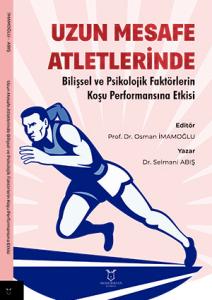
Uzun Mesafe Atletlerinde Bilişsel ve Psikolojik Faktörlerin Koşu Performansına Etkisi
Özet
Bu kitap, uzun mesafe atletlerinin koşu performansına etki eden bilişsel ve psikolojik faktörleri ele almaktadır. Yazar Dr. Selmani Abiş ve editör Prof. Dr. Osman İmamoğlu tarafından hazırlanan kitap, Akademisyen Kitabevi A.Ş. tarafından basılmıştır. Kitap, T.C. Kültür Bakanlığı bandrolüne sahiptir ve izin alınmadan çoğaltılamaz, basılamaz veya dağıtılamaz.Kitabın ilk bölümünde atletizmin genel bilgileri verilmektedir. Atletizmde koşu branşları, zihinsel dayanıklılık, psikolojik performans ve hedef yönelimi gibi konular da bu bölümde ele alınmaktadır. İkinci bölümde ise çalışmanın materyal ve yöntemi açıklanmaktadır. Gönüllü gruplarının oluşturulması ve veri toplama araçları gibi konular bu bölümde yer almaktadır.Üçüncü bölümde ise elde edilen verilerin analizi yapılmaktadır. Dördüncü bölümde ise bulgular sunulmaktadır. Beşinci bölümde ise bulgular tartışılmaktadır. Son bölümde ise çalışmanın sonuçları ve önerileri yer almaktadır.Bu kitap, uzun mesafe atletlerinin koşu performansını etkileyen bilişsel ve psikolojik faktörleri inceleyen bir doktora tezinden üretilmiştir. Kitap, atletizm alanında çalışan akademisyenler, antrenörler ve sporcular için faydalı bir kaynak olabilir.
This book examines the cognitive and psychological factors that affect the running performance of long-distance athletes. The book, prepared by Dr. Selmani Abiş and edited by Prof. Dr. Osman İmamoğlu, is published by Akademisyen Kitabevi A.Ş. The book has the official stamp of the Ministry of Culture and cannot be reproduced, printed, or distributed without permission. The first chapter of the book provides general information about athletics. Topics such as running disciplines in athletics, mental resilience, psychological performance, and goal orientation are discussed in this chapter. The second chapter explains the materials and methods used in the study. Topics such as the formation of volunteer groups and data collection tools are included in this chapter. The third chapter analyzes the collected data. The fourth chapter presents the findings. The fifth chapter discusses the findings. The final chapter includes the conclusions and recommendations of the study. This book is based on a doctoral thesis that examines the cognitive and psychological factors that affect the running performance of long-distance athletes. The book can be a useful resource for academics, coaches, and athletes working in the field of athletics.
Referanslar
Açıkada, C. ve Ergen, E. (1990). Bilim ve spor. Ankara: Büro-Tek Ofset Matbaacılık.
Ahern, N. R., Kiehl, E. M., Lou Sole, M., & Byers, J. (2006). A review of instruments measuring resilience. Issues in comprehensive Pediatric nursing, 29(2), 103-125.Akça, H. (2002). Başarının sekiz temel direği. İstanbul: Tuğra Yayınevi.
Akhun, İlhan, (1980). Akademik başarının kestirilmesi: Çoklu regresyon yaklaşımının uygulanmasına ilişkin bir araştırma, Ankara: Ankara Üniversitesi Eğitim Fakültesi Yayınları No: 88.
Akılveren, P. (2017). Sporcuların motivasyonel kendinle konuşma ve zihinsel dayanıklılık düzeyinin incelenmesi.
Akın, A. (2006). 2 x 2 Başarı yönelimleri ölçeği: geçerlik ve güvenirlik çalışması. Sakarya Üniversitesi Eğitim Fakültesi Dergisi, 12, 1-14.
Akın, A. (2006). Başarı amaç oryantasyonları ile biliş ötesi farkındalık, ebeveyn tutumları ve akademik başarı arasındaki ilişkiler. (Yayımlanmamış yüksek lisans tezi). Sakarya Üniversitesi, Sakarya.
Altıntaş, A. (2010) Sporcuların hedef yönelimleri, algılanan güdüsel iklimleri ve algılanan fiziksel yeterliklerinin cinsiyete ve deneyim düzeyine göre karşılaştırılması. (Yayımlanmış Yüksek Lisans Tezi). Ulusal Tez Merkezi. (267075)
Altıntaş, A. (2015). Sporcuların zihinsel dayanıklılıklarının belirlenmesinde optimal performans duygu durumu, güdülenme düzeyi ve hedef yöneliminin rolü (Yayımlanmış yüksek lisans tezi). Yök Ulusal Tez Merkezi veri tabanından elde edildi. (Tez no: 396532)
Altıntaş, A., and Koruç, P. B. (2016). Sporda zihinsel dayanıklılık envanteri’nin psikometrik özelliklerinin incelenmesi (SZDE). Spor Bilimleri Dergisi, 27(4), 163-171.
Altunkalem, S. (2020). Elit düzeydeki atletlerde uygulanan zihinsel antrenmanların zihinsel dayanıklılığa etkisinin incelenmesi (Yayımlanmış yüksek lisans tezi). Yök Ulusal Tez Merkezi veri tabanından elde edildi. (Tez no: 645577)
Ames C, Archer J. (1988). Achievement goals in the classroom: Students' learning strategies and motivation processes. Journal of Educational Psychology, 80(3),260-267.
Ames, C. (1992).Classrooms: Goals, structures and student motivation.Journal of Educational Psychology, 34(3), 261-271.
Anthony, D. R., Gordon, S., and Gucciardi, D. F. (2016). The Implementation and Evaluation of a Mental Toughness Development Program in Australian Football. A Behavioural Approach to Mental Toughness Development, 144.
Arıkanlı, A. ve Ulubaş B. (2004). Yönetim fonksiyonları ve yönetici davranışları, Ankara; Tarım Köy işleri Bakanlığı.
Arslanoğlu, K. (2005). Futbolun Psikiyatrisi. İthaki Yayınları: İstanbul, 126-130.
Aşçı, F. H., Çağlar, E., Eklund, R. C., Altıntaş, A., and Jackson, S. (2007). Durumluk ve sürekli optimal performans duygu durum-2 ölçekleri'nin uyarlama çalışması. Spor Bilimleri Dergisi, 18(4), 182-196.
Ataman, G, (2001), İşletme yönetimi temel kavramlar yeni yaklaşımlar. Türkmen Kitabevi: İstanbul.
Avcı, B. (2009). Öğrencinin liderliği (Yüksek lisans tezi). Gaziosmanpaşa Üniversitesi Sosyal Bilimler Enstitüsü, Tokat.
Aydın, A. (2011). Eğitim psikolojisi: Gelişim-öğrenme-öğretim. (12. Baskı). Ankara: Pegem Akademi.
Aydın, M. (1992). Eğitim yönetimi. (3. Baskı): Ankara: Hatiboğlu Yayınları.
Balcı, C. (2003). Atletizm. İstanbul: Boyut Yayınları.
Bandura, A. (1997). Self-efficacy: The exercise of control. New York: W.H. Freeman and Company, New York, 11-18.
Bandura, A. (1999). Moral disengagement in the perpetration of inhumanities. Personality and social psychology review, 3(3), 193-209.
Barling, J., and Abel, M. (1983). Self-efficacy beliefs and tennis performance. Cognitive therapy and research, 7(3), 265-272.
Baser E. (1996). Futbolda Psikoloji ve Basarı, Sporsal Kuram Dizisi. (2.Baskı). Ankara; Bagırgan Yayınevi.
Baser, E. (1986). Uygulamali spor psikolojisi. Ankara: MEGSB. Publications, 263.
Bayraktar, B., and Kurtoğlu, M. (2004). Sporda performans ve performans artırma yöntemleri. Doping ve futbolda performans artırma yöntemleri, İstanbul, 269-296.
Beardslee, W. R., Podorefsky, M. A. (1998). Resilient Adolescents Whose Parents Have Serious Affective and Other Psychiatric Disorders: Importance of Selfunderstanding and Relationships. Am J Psychiatry, 145: 63-69.
Biçer, T. (2009). Futbolculuk kariyeri belirlemede amaç ve hedef belirlemenin önemi. 3. Ulusal Futbol ve Bilim Kongresi’nde sunulan bildiri, Marmara Üniversitesi, Beden Eğitimi ve Spor Yüksekokulu, Ankara.
Bishop, A. J. (1980). Spatial abilities and mathematics education—A review. Educational studies in mathematics, 11(3), 257-269.
Block, J. H., Block, J. (1980). The Role of Ego-control and Ego-resiliency in the Organisation of Behaviour. WA Collins (Ed.), Development of Cognition, Affect, and Social Relations: Minnesota Symposia on Child Psychology, 13: 39-101. Hillsdale, NJ: Erlbaum.
Boyd J, Munroe KJ. (2003). The use of imagery in climbing. Athletic Insight Online. Available at www.athleticinsight.com/Vol5Iss2/ ClimbingImagery.htm. Accessed 20 July 2007
Bozkurt, S. (2010). Sportif performansa psikolojik bakış. CBÜ Beden Eğitimi ve Spor Bilimleri Dergisi, 5(1), 28-37.
Brewer, B.W. (2009). Injury prevention and rehabilitation. In B. W. Brewer (Ed.), Sport Psychology (pp. 83-96). Chichester, UK: Wiley-Blackwell.
Brick, N., Campbell, M., Metcalfe, R., Mair, J. L., and MacIntyre, T. (2016). Altering pace control and pace regulation: attentional focus effects during running. Medicine and science in sports and exercise, 48(5), 879-886.
Brief, A. P., and Aldag, R. J. (1977). The intrinsic-extrinsic dichotomy: Toward conceptual clarity. Academy of Management review, 2(3), 496-500.
Brutsaert, T. D., and Parra, E. J. (2006). What makes a champion? Explaining variation in human athletic performance. Respiratory physiology and neurobiology, 151(2-3), 109-123.
Bull, S. J., Albinson, J. G., and Shambrook, C. J. (1996). The mental game plan: Getting psyched for sport. Sports Dynamics.
Bull, S. J., Shambrook, C. J., James, W., and Brooks, J. E. (2005). Towards an understanding of mental toughness in elite English cricketers. Journal of applied sport psychology, 17(3), 209-227.
Büyüköztürk, Ş. (2007). Sosyal Bilimler için Veri Analizi El Kitabı, 7. baskı, Pegem A Yayıncılık.
Carroll, B., and Alexandris, K. (1997). Perception of constraints and strength of motivation: Their relationship to recreational sport participation in Greece. Journal of Leisure Research, 29(3), 279-299.
Cattell, R. B. (1957). Personality and motivation structure and measurement. New York:Harcourt, Brace and World.
Cervello EM, Murcia JAM, Coll DGC. (2007). Young athletes’ motivational profiles. J Sport Sci Med;6: 172–79.
Cervelló, E. M., Escartí, A., and Guzmán, J. F. (2007). Youth sport dropout from the achievement goal theory. Psicothema, 65-71.
Chung, C. H., and Sung, C. H. (1996). The Effects of achievement goal orientations and goal-setting styles on motivational behavior and sport performance. SNU Journal of Education Research, 6.
Clough, P., Earle, K., and Sewell, D. (2002). Mental toughness: The concept and its measurement. Solutions in sport psychology, 32-43.cognitive evaluation theory. J Per Soc Psychol, 43(3):450-61.
Connaughton, D., Hanton, S. (2009). Mental toughness in sport: Conceptual and practical issues. In S.D. Mellalieu and S. Hanton (Eds.), Advances in Applied Sport Psychology: A Review (pp. 317-346). London: Routledge.
Connaughton, D., Wadey, R., Hanton, S., and Jones, G. (2008). The development and maintenance of mental toughness: Perceptions of elite performers. Journal of sports sciences, 26(1), 83-95.
Connolly C.S(1998). Sporcular için zihinsel antrenman rehberi. (Çeviren FU Erkan). 1. Baskı. Bağırgan Yayınevi. Ankara.
Cox RH. (1998). Sport Psychology Concepts and Applications. (4th Edition). WCB McGraw-Hill, 172- 180.
Cox, R. H. (2012). Goal perspective theory. Sport Psychology. Concepts and Applications. 7th ed. NY: New York: McGraw-Hill, 79-97.
Crust, L. (2007). Mental toughness in sport: A review. International Journal of Sport and Exercise Psychology, 5(3), 270-290.
Crust, L. (2008). A review and conceptual re-examination of mental toughness: Implications for future researchers. Personality and individual differences, 45(7), 576-583.
Crust, L. (2009). The relationship between mental toughness and affect intensity. Personality and Individual Differences, 47(8), 959-963.
Crust, L., and Azadi, K. (2010). Mental toughness and athletes' use of psychological strategies. European Journal of Sport Science, 10(1), 43-51.
Crust, L., and Clough, P. J. (2011). Developing mental toughness: From research to practice. Journal of Sport Psychology in Action, 2(1), 21-32.
Crust, L., and Swann, C. (2011). Comparing two measures of mental toughness. Personality and Individual Differences, 50(2), 217-221.
Crust, L., Earle, K., Perry, J., Earle, F., Clough, A., and Clough, P. J. (2014). Mental toughness in higher education: Relationships with achievement and progression in first-year university sports students. Personality and individual differences, 69, 87-91.
Çakmak, E. (2019). Oryantiring sporcularının zihinsel dayanıklılık düzeyleri ve başarı hedefleri arasındaki ilişki. (Yayımlanmamış yüksek lisans tezi). Ege Üniversitesi, İzmir, Türkiye.
Çekiç, Ö. (2018). Farklı mevkilerde oynayan futbolcuların hedef yönelimi ve algılanan motivasyonel iklim özellikleri arasındaki ilişki (Yayımlanmış yüksek lisans tezi). Yök Ulusal Tez Merkezi veri tabanından elde edildi. (Tez no: 518700)
Çekiç, Ö. (2019). Farklı mevkilerde oynayan futbolcuların hedef yönelimi ve algılanan motivasyonel iklim özellikleri arasındaki ilişki (Master's thesis, Trakya Üniversitesi Sağlık Bilimleri Enstitüsü).
Çetiner, H. B. (2021). Taekwondo sporcularının sporda zihinsel dayanıklılık düzeyinin antrenör-sporcu ilişkisine olan etkisinde temel psikolojik ihtiyaçların aracılık rolü. (Yayımlanmış Yüksek Lisans tezi). Yök Ulusal Tez Merkezi. (666071)
Çumralıgil, O. (2021). Aktif boks yapan sporcuların mental dayanıklılık düzeylerinin çeşitli değişkenlere göre incelenmesi. (Yayımlanmış Yüksek lisans tezi). Yök Ulusal Tez Merkezi. (657979)
Dede, Y. E. (2019). Elit Güreşçilerin Zihinsel Dayanıklılıklarının İncelenmesi (Master's thesis, Aydın Adnan Menderes Üniversitesi Sağlık Bilimleri Enstitüsü).
Demir, P. (2021). Bocce 1. lig, 2. lig ve 3. liginde mücadele eden sporcuların zihinsel dayanıklılık ve duygusal zekâ düzeylerinin incelenmesi. (Yayımlanmış Yüksek lisans tezi). Yök Ulusal Tez Merkezi. (672638)
Diamond, L. K., and Brannick, M. T. (2003). Performance and perceived team and player efficacy in bowling teams. In 18th Annual Conference of the Society for Industrial and Organizational Psychology, Orlando, FL.
Diamond, L. M., and Aspinwall, L. G. (2003). Emotion regulation across the life span: An integrative perspective emphasizing self-regulation, positive affect, and dyadic processes. Motivation and Emotion, 27(2), 125-156.
Doğan, O. (2005). Spor psikolojisi (2. Baskı). Adana: Nobel Kitabevi, 70-76.
Druckman, D. E., and Bjork, R. A. (1994). Learning, remembering, believing: Enhancing human performance. National Academy Press. 277-293.
Duda, J. L. (1989). Relationship between task and ego orientation and the perceived purpose of sport among high school athletes. Journal of sport and exercise psychology, 11(3), 318-335.
Duda, J. L., and Hom, H. L. (1993). Interdependencies between the perceived and self-reported goal orientations of young athletes and their parents. Pediatric Exercise Science, 5(3), 234-241.
Duda, J. L., and Nicholls, J. G. (1992). Dimensions of achievement motivation in schoolwork and sport. Journal of educational psychology, 84(3), 290.
Duda, J. L., and White, S. A. (1992). Goal orientations and beliefs about the causes of sport success among elite skiers. The sport psychologist, 6(4), 334-343.
Duda, J., and Hall, H. (2001). Achievement goal theory in sport: Recent extensions and future directions. In Handbook of sport psychology (2nd edition), John Wiley and Sons, New York, 417-434.
Duygulu, A. (1989). Atletizm- Beden Eğitimi ve Spor Ders Kitabı. Ankara
Ekstrand, J., Hodson, A., and Karlsson, J. (Eds.). (2003). Football medicine. Taylor and Francis. 39-121
Ekstrand, J., Hodson, A., and Karlsson, J. (Eds.). (2003). Football medicine. Taylor and Francis.
Erdoğan, N. (2016). Zihinsel Dayanıklılık Ölçeği (ZDÖ): Türkçe'ye uyarlama, geçerlik ve güvenirlik çalışması. International Journal of Sport Culture and Science, 4(Special Issue 2), 652-664.
Erkuş, A. (1994). Psikolojik terimler sözlüğü: İngilizce-Türkçe. Doruk Yayınları, Ankara, 83-85.
Erman, K. A., Şahan, A., Tercan, E., and Soydaş, Ş. (2002). Psikolojik Performans Envanterinin Türkçe’ye Uyarlanması. (s. 100).
Fisher, S., and Hood, B. (1987). The stress of the transition to university: a longitudinal study of psychological disturbance, absent‐mindedness and vulnerability to homesickness. British journal of psychology, 78(4), 425-441.
Garmezy, N. (1991). Resiliency and vulnerability to adverse developmental outcomes associated with poverty. American behavioral scientist, 34(4), 416-430.
Geisler, G. W., and Leith, L. M. (1997). The effects of self-esteem, self efficacy, and audience presence on soccer penalty shot performance. Journal of Sport Behavior, 20(3), 322.
Genç, N., Yıldırım, Y., and Müftüoğlu, N. E. (2018). Veteran Badmintoncularda Hedef Yönelimleri ile Yaşam Doyumu ilişkisi. Türkiye Spor Bilimleri Dergisi, 2(1), 26-33.
Gençöz, T. (2000). Pozitif ve negatif duygu ölçeği: Geçerlik ve güvenirlik çalışması. Türk Psikoloji Dergisi, 15(46), 19-26.
George, D., Mallery, P. (2016). IBM SPSS Statistics 23 Step by Step: A Simple Guide and Reference. New York: Routledge. pp:112-120.
Gill, D. L., and Deeter, T. E. (1988). Development of the sport orientation questionnaire. Research Quarterly for Exercise and Sport, 59(3), 191-202. goal orientations of basketball players. SHS Web of Conferences. 37, s. 01041. Budapest: EDP Science.
Golby, J., Sheard, M., and Lavallee, D. (2003). A cognitive-behavioural analysis of mental toughness in national rugby league football teams. Perceptual and Motor skills, 96, 455-462.
Goldberg, A. S. (1998). Sports slump busting: 10 steps to mental toughness and peak performance. Llumina Press.
Gould, D., Dieffenbach, K., and Moffett, A. (2002). Psychological characteristics and their development in Olympic champions. Journal of applied sport psychology, 14(3), 172-204.
Gould, D., Hodge, K., Peterson, K., and Petlichkoff, L. (1987). Psychological foundations of coaching: Similarities and differences among intercollegiate wrestling coaches. The Sport Psychologist, 1(4), 293-308.
Gould, D., Weiss, M., and Weinberg, R. (1981). Başarılı ve başarısız Big Ten güreşçilerinin psikolojik özellikleri. Spor ve Egzersiz Psikolojisi Dergisi, 3 (1), 69-81.
Gucciardi, D. F. (2012). Measuring mental toughness in sport: a psychometric examination of the Psychological Performance Inventory–A and its predecessor. Journal of personality assessment, 94(4), 393-403.
Gucciardi, D. F., Gordon, S., and Dimmock, J. A. (2008). Towards an understanding of mental toughness in Australian football. Journal of applied sport psychology, 20(3), 261-281.
Gucciardi, D., and Gordon, S. (2011). Mental toughness in sport: Developments in theory and research. Routledge
Güleroğlu, F. (2017). Anaerobik Egzersiz Sonrası Oluşan Yorgunluğun Sporcuların Zihinsel Dayanıklılık Düzeylerine Akut Etkisi. (Yayımlanmış yüksek lisans tezi). Yök Ulusal Tez Merkezi veri tabanından elde edildi. (Tez no: 484645)
Gürer, B., Bektaş, F., and Kural, B. (2018). Doğa sporları faaliyetlerine katılan sporcuların psikolojik performanslarının incelenmesi. Spor ve Performans Araştırmaları Dergisi, 9(2), 74-85.
Gürer, B., Pelsayılır, G., Satıcı, M., and Abakay, U. (2016). Gaziantep Olimpiyat Hazırlık Merkezindeki Sporcuların Psikolojik Performanslarının İncelenmesi. Gaziantep Üniversitesi Spor Bilimleri Dergisi, 1(2), 26-39
Güven, Ş., and Yazıcı, A. (2020). Türkiye’de Zihinsel Dayanıklılık Konusunda Yapılmış Araştırmaların Analizi ve İncelenmesi. Ulusal Spor Bilimleri Dergisi, 4(1), 82-93.
Hahn, E. (1989). Sport psychology in athletics. New Studies in Athletics, 4, 7-13.
Hall, C. R. (2001). Imagery in sport and exercise. In R. N. Singer, H. A. Hausenblas, and C. M. Janelle (Eds.), Handbook of sport psychology, 2nd edn (pp. 529–549). New York, NY: John Wiley and Sons.
Hardy, L., Jones, G., Gould, D. (1997). Understanding Psychological Preparation for Sport: Theory and Practice of Elite Performans, Chichester; John Wiley and Sons., New York, 205-212.
Harmancı, F. (2019). Sporda zihinsel dayanıklılık bisiklet sporcuları üzerinde bir çalışma. Yayımlanmış yüksek lisans tezi, Selçuk Üniversitesi, Konya, Türkiye.
Haslofça, F. (2009). İlköğretim Okullarında Ders İçi ve Ders Dışı “Çocuk Atletizmi” Uygulamalarının Oluşturacağı Motivasyonel İklimin Hedef Yönelimler Üzerine Etkisi. (Yayımlanmamış Doktora Tezi). Ege Üniversitesi Sağlık Bilimleri Enstitüsü – Beden Eğitimi ve Spor- Sporda Psikososyal Alanlar Anabilim Dalı, İzmir 2009, s. 38-42
Hellandsig, E. T. (1998). Motivational predictors of high performance and discontinuation in different types of sports among talented teenage athletes. International Journal of Sport Psychology. 29: 27-44.
Hunter, A. J. (2001). A cross-cultural comparison of resilience in adolescents. Journal of Pediatric Nursing, 16(3), 172-179.In D. Lavallee, J. M. Williams, M. V. Jones (Eds.) and M. Allen, C. Spray, H. Peters, M. Eys, G. Morgan, V. Krane, C. Douglas, M. I. Jones, A. Papathomas, C. Scherzer, K. Goodger (Collaborators), Key studies in sport and exercise psychology (pp. 3–23). Open University Press
İkizler, C, Karagözoğlu, C. (1997). Sporda başarının psikolojisi. (3. Baskı), İstanbul, Alfa Basım Yayım Dağıtım, 119-128
İkizler, C., Karagözoğlu, C. (1997). Sporda başarının psikolojisi. İstanbul: Alfa Basın Yayın Dağıtım. individualistic of sports is ultimately a mental game. Psychology Today, 22: 60-62
İşler, M. (1997). Okullarda Atletizm. Ankara: Tütibay Yayınları.
Jacelon, C. S. (1997). The trait and process of resilience. Journal of advanced nursing, 25(1), 123-129.
Jackson, S. A., Thomas, P. R., Marsh, H. W., and Smethurst, C. J. (2001). Relationships between flow, self-concept, psychological skills, and performance. Journal of applied sport psychology, 13(2), 129-153.
Jondeau, E., & Rockinger, M. (2003). Conditional volatility, skewness, and kurtosis: existence, persistence, and comovements. Journal of Economic dynamics and Control, 27(10), 1699-1737.
Jones, G., Hanton, S., and Connaughton, D. (2007). A framework of mental toughness in the world’s best performers. The Sport Psychologist, 21(2), 243-264.
Jones, G., Hanton, S., Connaughton, D. (2002). What is this thing called mental toughness? An investigation of elite sport performers. Journal of Applied Sport Psychology, 14(3), 205-218.
Jones, J. W., Neuman, G., Altmann, R., and Dreschler, B. (2001). Development of the sports performance inventory: A psychological measure of athletic potential. Journal of Business and Psychology, 15(3), 491-503.
Jones, M. I., and Parker, J. K. (2013). What is the size of the relationship between global mental toughness and youth experiences? Personality and Individual Differences, 54(4), 519-523.
Kalkavan, A., Özdilek, Ç., and Çakır, G. (2020). Dağ bisikletçilerininin zihinsel dayanıklılık düzeylerinin araştırılması. Beden Eğitimi ve Spor Bilimleri Dergisi, 22(2), 31-43.
Karasar, N. (2002). Araştırma raporu hazırlama. Nobel Yayın Dağıtım, Ankara.
Karharman, A. (2019). Elit dağ koşusu sporcularında pozitif algı ve zihinsel dayanıklılık düzeylerinin başarı motivasyonu üzerine etkisinin incelenmesi. (Yayımlanmış Doktora tezi). Yök Ulusal Tez Merkezi. (611860)
Kayhan, R. F., Hacıcaferoğlu, S., Aydoğan, H., and Erdemir, İ. (2018). Takım ve bireysel sporlar ile ilgilenen sporcuların zihinsel dayanıklılık durumlarının incelenmesi. Sportif Bakış: Spor ve Eğitim Bilimleri Dergisi, 5(2), 55-64.
Kazak Z, Moralı S, Doğan B. (2002). VII. Uluslararası Spor Bilimleri Kongresi: Sporcuların güdüsel yönelimlerinin öngörücüleri olarak: hedef yönelimi, sportif yeterlik ve yaşam doyumu. 27-29 Ekim, Antalya.
Keller, J., and Bless, H. (2008). Flow and regulatory compatibility: An experimental approach to the flow model of intrinsic motivation. Personality and social psychology bulletin, 34(2), 196-209.
Kelly, G. (1955). The psychology of personal constructs (New York, WN Norton and Company Inc).
Kent, L. K., and Shapiro, P. A. (2009). Depression and related psychological factors in heart disease. Harvard review of psychiatry, 17(6), 377-388.
Klag, S., and Bradley, G. (2004). The role of hardiness in stress and illness: An exploration of the effect of negative affectivity and gender. British journal of health psychology, 9(2), 137-161.
Kocaekşi, S. (2010). Hentbol bayan milli takımında zaman değişimi ve performansın grup sargınlığı, sportif kendine güven, öz-yeterlik, hedef yönelimi ve yarışma kaygısı üzerine etkisi.
Konter, E. (1998). Sporda psikolojik hazırlığın teori ve pratiği. Ankara, Bağırgan Yayımevi ; 16-41.
Konter, E. (2003). Spor psikolojisi uygulamalarında yanılgılar ve gerçekler. Dokuz Eylül Yayınları.
Kroll, W. (1967). Sixteen personality factor profiles of collegiate wrestlers. Research Quarterly. American Association for Health, Physical Education and Recreation, 38(1), 49-57.
Kurtulget, E. (2020). Atletlerde mükemmeliyetçilik ve zihinsel dayanıklılığın incelenmesi. (Yayımlanmış Yüksek lisans tezi). Ulusal tez merkezi. (648749)
Leahey, TH. (2000). A History of Modern Psychology. (3. Baskı). Prentice Hall, New Jersey, 12-37.
Lindner, K. J., and Kerr, J. (2001). Predictability of sport participation motivation from metamotivational dominances and orientations. Personality and Individual Differences, 30(5), 759-773.
Locke, E. A., and Latham, G. P. (1990). A theory of goal setting and task performance. Prentice-Hall, Inc.
Loehr, J. (1986). Mental toughness training for athletes: Achieving athletic excellence. New York: New American Library.
Loehr, J. E. (1995). The new toughness training for sports. New York: Plume.
Loehr, J.E. (1986). Mental toughness training for sports; Achieving athletic excellence. Stephen Greene Press, Lexington, MA, 10-15.
Loher JE. (1986). Mental Toughness Training for Sports; Achieving Athletic Excellence, The Stephen Grene Press, New York, 157-160.
Luthans, F. (2002). Positive organizational behavior: Developing and managing psychological strengths. Academy of Management Perspectives, 16(1), 57-72.
Luthar, S. S. (1991). Vulnerability and resilience: A study of high‐risk adolescents. Child development, 62(3), 600-616.
Luthar, S. S., Cicchetti, D., and Becker, B. (2000). The construct of resilience: A critical evaluation and guidelines for future work. Child development, 71(3), 543-562.
Maddi, S. R., and Khoshaba, D. M. (1994). Hardiness and mental health. Journal of personality Assessment, 63(2), 265-274.
Martens R. (1987). Coaches Guide to Sport Psychology, Ilinois: Human Kinetics Publishers, 77- 89.
Masten, A. S. (2001). Ordinary magic: Resilience processes in development. American psychologist, 56(3), 227.
Masten, A. S., Best, K. M., and Garmezy, N. (1990). Resilience and development: Contributions from the study of children who overcome adversity. Development and psychopathology, 2(4), 425-444.
Maughan, R. J. (2005). The limits of human athletic performance. Annals of transplantation, 10(4), 52-54.
Maynard, I. W., Smith, M. J., and Warwick-Evans, L. (1995). The effects of a cognitive intervention strategy on competitive state anxiety and performance in semiprofessional soccer players. Journal of Sport and Exercise Psychology, 17(4), 428-446.
Mcmanus, S. P. (2004). Relationship Between Collegiate Track Runners' Achievement Goal Orientations and Perceptions of Motivational Climate (Doctoral dissertation, University of Florida).
Meyers, M. C., Bourgeois, A. E., LeUnes, A., and Murray, N. G. (1999). Mood and psychological skills of elite and sub-elite equestrian athletes. Journal of Sport Behavior, 22(3), 399.
Middleton, S. C., Marsh, H. W., Martin, A. J., Richards, G. E., and Perry, C. (2004). Discovering mental toughness: A qualitative study of mental toughness in elite athletes [R].
Miller III, W. Z. (2002). The psyche-centered zone of peak performance: Depth psychology applied to golf. Pacifica Graduate Institute.
Morgan, K., Sproule, J., Weigand, D., and Carpenter, P. (2005). A computer-based observational assessment of the teaching behaviours that influence motivational climate in physical education. Physical Education and Sport Pedagogy, 10(1), 83-105.
Morgan, W. P., Pollock, M. L., Lavallee, D. E., Williams, J. M., Jones, M. V., and Allen, M. C. (2008). Psychologic characterization of the elite distance runner.
Morris, T., Spittle, M., and Watt, A. P. (2005). Imagery in sport. Human Kinetics Publishers, Ilinois, 124-195.
Murphy, P. K., and Alexander, P. A. (2000). A motivated exploration of motivation terminology. Contemporary educational psychology, 25(1), 3-53.
Nicholls, A. R., Polman, R. C., Levy, A. R., and Backhouse, S. H. (2008). Mental toughness, optimism, pessimism, and coping among athletes. Personality and individual differences, 44(5), 1182-1192.
Nicholls, A. R., Polman, R., Levy, A. and Backhouse, S. H. (2009). Mental toughness in sport: Achievement level, gender, age, experience and sport type differences. Personality and Individual Differences, 47, 73–75.
Nicholls, J. G. (1984). Achievement motivation: conceptions of ability, subjective experience, task choice, and performance. Psychological review, 91(3), 328.
Nicholls, J. G., Cheung, P. C., Lauer, J., and Patashnick, M. (1989). Individual differences in academic motivation: Perceived ability, goals, beliefs, and values. Learning and individual differences, 1(1), 63-84.
Nicholls, JG, Cobb, P., Wood, T., Yackel, E., and Patashnick, M. (1990). Öğrencilerin matematikte başarı teorilerinin değerlendirilmesi: Bireysel ve sınıf farklılıkları. Matematik Eğitiminde Araştırma Dergisi, 21 (2), 109-122.
Özerkan, K. N. (2004). Spor psikolojisine giriş. Nobel Yayınları, Ankara.
Özgen Feralan, A. (2019). Voleybolcuların psikolojik performans stratejilerinin belirlenmesi (Master's thesis, Sosyal Bilimler Enstitüsü).
Papaioannou, A. (1994). Development of a questionnaire to measure achievement orientations in physical education. Research quarterly for exercise and sport, 65(1), 11-20.
Peke, K. (2020). Oryantiring katılımcılarının spora bağlılıkları ve zihinsel dayanıklılıklarının incelenmesi (Master's thesis, İstanbul Gelişim Üniversitesi Lisansüstü Eğitim Enstitüsü).
Perry, J. L., Clough, P. J., Crust, L., Earle, K., and Nicholls, A. R. (2013). Factorial validity of the mental toughness questionnaire-48. Personality and individual differences, 54(5), 587-592.
Pervin, L. A., and John, O. P. (2001). Personality Theory and Research. (8th Edition), John Wiley and Sons, New York, 184-186.
Reardon, J. (1992). "Psychological Skill Development Leading To A Peak Performance "Flow State" Track and Field Ouarterly, Spring, 92 (1), Sf. 22-25.
Recours, R. A., Souville, M., and Griffet, J. (2004). Expressed motives for informal and club/association-based sports participation. Journal of Leisure Research, 36(1), 1-22.
Reeve J. (2001). Understanding motivation and emotion, (3rd Edition), John Wiley and Sons, Inc. USA, 4-7.
Ryan, R. M. (1982). Control and information in the intrapersonal sphere: An extension of cognitive evaluation theory. Journal of personality and social psychology, 43(3), 450.Roberts, G. C. (Ed.). (1992). Motivation in sport and exercice.
Ryan, R. M., and Deci, E. L. (2000). Intrinsic and extrinsic motivations: Classic definitions and new directions. Contemporary educational psychology, 25(1), 54-67.
Ryska, T. A. (2003). Sportsmanship in young athletes: The role of competitiveness, motivational orientation, and perceived purposes of sport. The Journal of Psychology, 137(3), 273-293.
Schmidt, U., McGuire, R., Humphrey, S., Williams, G., and Grawer, B. (2005). Team cohesion. In J. Taylor and G. Wilson (Eds.), Applying sport psychology: Four perspectives (pp. 171–183). Champaign, IL: Human Kinetics.
Seydaoğullari, Ö. (2018). Sporda zihinsel dayanıklılık ölçeği geliştirme çalışması (Master's thesis, Sağlık Bilimleri Enstitüsü).
Sheard, M. (2013). Mental Toughness: The Mindset Behind Sporting Achievement. Second Edition, Hove, East Sussex: Routledge.
Sheard, M., and Golby, J. (2006). Effect of a psychological skills training program on swimming performance and positive psychological development. International journal of sport and exercise psychology, 4(2), 149-169.
Sheard, M., Golby, J., and Van Wersch, A. (2009). Progress toward construct validation of the Sports Mental Toughness Questionnaire (SMTQ). European Journal of Psychological Assessment, 25(3), 186-193.
Short, S. E., and Short, M. W. (2005). Differences between high-and low-confident football players on imagery functions: A consideration of the athletes' perceptions. Journal of Applied Sport Psychology, 17(3), 197-208.
Stephens, D. E., and Bredemeier, B. J. L. (1996). Moral atmosphere and judgments about aggression in girls’ soccer: Relationships among moral and motivational variables. Journal of sport and exercise psychology, 18(2), 158-173.
Sternberg, R. J., and Williams, W. M. (2002). Educational psychology. Boston: Allyn and Bacon, 45-251.
Stoeber, J., Stoll, O., Pescheck, E., and Otto, K. (2008). Perfectionism and achievement goals in athletes: Relations with approach and avoidance orientations in mastery and performance goals. Psychology of sport and exercise, 9(2), 102-121.
Sucan, S. (2012) Ferdi ve takım sporcularının yaşam kalitesinin psikolojik performans üzerindeki etkisi. (Yayımlanmış Doktora tezi). Ulusal Tez Merkezi. (331404)
Taf, (2020). Türkiye Atletizm Federasyonu, Atletizm ve Branşlar, [İnternet],2020 [11 Haziran 2020 tarihinde erişildi]. Erişim adresi: http://www.taf.org.tr/kurallarolculer/
Tavşancıl, E. (2014). Tutumların Ölçülmesi ve SPSS ile Veri Analizi. Ankara: Nobel Akademik Yayıncılık.
Tekil, N. (1984). Atletizm. İstanbul: Adam Yayınları.
Thelwell, R. C., Such, B. A., Weston, N. J., Such, J. D., and Greenlees, I. A. (2010). Developing mental toughness: Perceptions of elite female gymnasts. International Journal of Sport and Exercise Psychology, 8(2), 170-188.
Thelwell, R., Weston, N., and Greenlees, I. (2005). Defining and understanding mental toughness within soccer. Journal of applied sport psychology, 17(4), 326-332.
Thomas N. (2004). The Concise Adair on Teambuilding and Motivation. Thorogood Publishers, London, 58-62.
Tiryaki, Ş. (2000). Spor psikolojisi: kavramlar, kuramlar ve uygulama. Eylül kitabevi ve yayınevi, Ankara, 60-65.
Toros, T. (2001). Elit ve elit olmayan erkek basketbolcularda hedef yönelimi, güdüsel iklim ve hedeflerin özgünlük güçlük derecesi özelliklerinin yaşam doyumuna etkisi (Yayımlanmış yüksek lisans tezi). Yök Ulusal Tez Merkezi veri tabanından elde edildi. (Tez no:103640)
Toros, T. (2002). “Elit ve elit olmayan erkek basketbolcularda hedef yönelimi, güdüsel (motivasyonel) iklim ve yaşam doyumu”. H.Ü. Spor Bilimleri Dergisi. 13(3), pp. 24-36
Toros, T. (2004). " Sporda görev ve ego yönelim ölçeği-sgeyö-" nin türk sporcuları için güvenirlik ve geçerlik çalışması. Spor Bilimleri Dergisi, 15(3), 155-166.
Toros, T., and Koruç, Z. (2005). Hedef yönelimleri ve algılanan motivasyonel iklim arasındaki ilişki (liseli erkek voleybolcular üzerine bir çalışma). Spor Bilimleri Dergisi, 16(3), 135-145.
Uyar, G. (2019). Spor yapan üniversite öğrencilerinde zihinsel dayanıklılık ile duygusal zekâ arasındaki ilişkinin incelenmesi. (Yayımlanmış Yüksek Lisans tezi). Yök Ulusal Tez Merkezi. (567524)
Üngür, G. (2009). Amatör ve profesyonel futbolcularda hedef yönelimi ve algılanan motivasyonel iklim arasındaki ilişki. (Yayımlanmamış yüksek lisans tezi). İzmir.Üngür, G. (Ege Üniversitesi, Sağlık Bilimleri Enstitüsü Yüksek Lisans Tezi.
Vanek, M., and Cratty, B. J. (1970). Psychology and the superior athlete. Macmillan.
Vealey, R. S. (2001). Understanding and enhancing self-confidence in athletes. Handbook of sport psychology, 2, 550-565.
Vernacchia, R. (1992). "Applied Sport Psychology Services For Track and Field Coach and Athelete" Track and Field Ouarterly, Spring 92 (1), Sf. 1-3.
Wade, D. T. (2009). Goal setting in rehabilitation: an overview of what, why and how. Clinical rehabilitation, 23(4), 291-295.
Wagnild, G. M., and Young, H. M. (1993). Development and psychometric. Journal of nursing measurement, 1(2), 165-17847.
Weınberg, R., Forlenza, S. (2012). Psychological skills. In: Tenenbaum, G., Eklund, R.C. Kamata, A. (Eds.). Measurement in Sport and Exercise Psychology. Human Kinetics, Champaign, IL.
Weinberg RS, Gould D. (1995). Foundations of Sport and Exercise Psychology. Champaign, IL: Human Kinetics, s. 280- 283.
Weinberg, R. S., and Gould, D. (1995). Arousal, stress, and anxiety. Foundations of sport and exercise psychology, 91-113.
Weinberg, R.S., and Gould, D. (2003). Foundations of sport and exercise psychology. In: Carolina N, Miami UP (Eds.) 3rd edition, USA, 64–66
Werner, A. C., and Gottheil, E. (1966). Personality development and participation in college athletics. Research Quarterly. American Association for Health, Physical Education and Recreation, 37(1), 126-131.
Werner, E. E. (1995). Resilience in development. Current directions in psychological science, 4(3), 81-84.
Wıllıams, R. M. (1988). The U.S. Open character test: Good strokes help. But the most
Wittig, A. F. (1984). Sport competition anxiety and sex role. Sex Roles, 10(5), 469-473.
Yapıcı, A.K. (2000) Modern Olimpiyat Oyunlarında Atletizm Rekorlarını Hazırlayan Faktörler ve Gelişimi, Dumlupınar Üniversitesi Sosyal Bilimler Enstitüsü Yüksek Lisans Tezi, Kütahya.
Yarayan, Y. E., Yıldız, A. B., and Gülşen, D. B. A. (2018). Elit düzeyde bireysel ve takım sporu yapan sporcuların zihinsel dayanıklılık düzeylerinin çeşitli değişkenlere göre incelenmesi.
Yıldız, A. B. and Yılmaz, B. (2017). Sporcularda Zihinsel Dayanıklılık ve Öz Yeterlik Düzeyleri Arasındaki İlişkinin İncelenmesi. 15. Uluslararası Spor Bilimleri Kongresi.
Yıldız, Y.A. (2016). Uzun mesafeci sporcularda kalp atım hızı ve koşu performansı (Yayımlanmış yüksek lisans tezi). Yök Ulusal Tez Merkezi veri tabanından elde edildi. (Tez no: 426908)
Yildiz, S. (2018). Üniversite süper lig basketbol oyuncularının hedef yönelimi ve algılanan motivasyonel iklim düzeylerinin incelenmesi. (Master’s thesis, Eğitim Bilimleri Enstitüsü)
Yayınlanan
Lisans
LisansBu İnternet Sitesi içeriğinde yer alan tüm eserler (yazı, resim, görüntü, fotoğraf, video, müzik vb.) Akademisyen Kitabevine ait olup, 5846 sayılı Fikir ve Sanat Eserleri Kanunu ve 5237 sayılı Türk Ceca Kanunu kapsamında korunmaktadır. Bu hakları ihlal eden kişiler, 5846 sayılı Fikir ve Sanat eserleri Kanunu ve 5237 sayılı Türk Ceza Kanununda yer alan hukuki ve cezai yaptırımlara tabi olurlar. Yayınevi ilgili yasal yollara başvurma hakkına sahiptir.