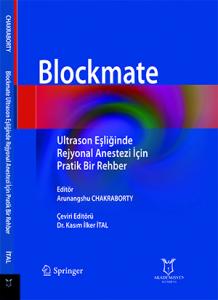
Rejyonal Anestezide Son Gelişmeler
Özet
Rejyonal anestezi uygulamaları, son on yılda geleneksel anatomik landmark tekniklerinden ultrason rehberliğine geçişle birlikte köklü bir değişim yaşamıştır. Ultrasonografinin erişilebilir hale gelmesi, bu alanda yeni bir bakım standardı oluşturarak başarı oranlarını artırmış ve komplikasyonları azaltmıştır. Rejyonal anestezi artık sadece genel anesteziye bir alternatif değil, cerrahi stres yanıtını körelten ve opioid kullanımını azaltan multimodal ağrı yönetimi stratejisinin kritik bir parçasıdır. Teknolojik ilerlemeler, fasial plan blokları gibi yeni yaklaşımları kolaylaştırmış ve iğne ucu takibi ile sinir-iğne temasını tespit eden basınç izleme sistemlerini geliştirmiştir. Ayrıca, makine öğrenmesi ve derin öğrenme modelleri, femoral sinir ve brakial pleksus gibi yapıların otomatik tanınmasında kullanılmaya başlanarak klinik uygulama ve eğitimde yeni bir dönem başlatmıştır. Bu gelişmeler, rejyonal anestezinin modern tıptaki rolünü genişletmeye devam etmektedir.
Regional anesthesia practices have evolved significantly over the last decade, transitioning from traditional anatomical landmark techniques to ultrasound guidance. The accessibility of ultrasonography has established a new standard of care, increasing success rates while reducing complications. Regional anesthesia is no longer merely an alternative to general anesthesia; it is a critical part of multimodal pain management strategies that blunt surgical stress responses and reduce opioid consumption. Technological advancements have facilitated new approaches like fascial plane blocks and improved needle-tip tracking and pressure monitoring systems to detect nerve-needle contact. Furthermore, machine learning and deep learning models have begun to be used for the automated recognition of structures such as the femoral nerve and brachial plexus, ushering in a new era for clinical practice and education. These developments continue to expand the role of regional anesthesia in modern medicine.
Referanslar
Sen S, Ge M, Prabhakar A, et al. Recent technological advancements in regional anesthe- sia. Best Pract Res Clin Anaesthesiol. 2019;33(4):499–505. https://doi.org/10.1016/j. bpa.2019.07.002.
Albrecht E, Chin KJ. Advances in regional anaesthesia and acute pain management: a narrative review. Anaesthesia. 2020;75:e101–10. https://doi.org/10.1111/anae.14868.
Admir Hadzic, Xavier Sala-Blanch, Daquan Xu. Ultrasound Guidance May Reduce but Not Eliminate Complications of Peripheral Nerve Blocks. Anesthesiology. 2008:108(4):557–58.
Memtsoudis SG, Sun X, Chiu YL, et al. Perioperative comparative effectiveness of anesthetic technique in orthopedic patients. Anesthesiology. 2013;118:1046–58.
Perlas A, Chan VW, Beattie S. Anesthesia technique and mortality after total Hip or Knee Arthroplasty: a retrospective. Propensity Score-matched Cohort Study. Anesthesiology. 2016;125:724–31.
McIsaac DI, Cole ET, McCartney CJ. Impact of including regional anaesthesia in enhanced recovery protocols: a scoping review. Br J Anaesth. 2015;115(Suppl 2):ii46–56. https://doi. org/10.1093/bja/aev376.
Helander EM, Webb MP, Bias M, Whang EE, Kaye AD, Urman RD. Use of regional anesthesia techniques: analysis of institutional enhanced recovery after surgery protocols for colorectal surgery. J Laparoendosc Adv Surg Tech A. 2017;27(9):898–902. https://doi.org/10.1089/lap.2017.0339.
Davis N, Lee M, Lin AY, et al. Postoperative cognitive function following general versus regional anesthesia: a systematic review. J Neurosurg Anesthesiol. 2014;26(4):369–76. https:// doi.org/10.1097/ANA.0000000000000120.
Mason SE, Noel-Storr A, Ritchie CW. The impact of general and regional anesthesia on the incidence of post-operative cognitive dysfunction and post-operative delirium: a systematic review with meta-analysis. J Alzheimers Dis. 2010;22(Suppl 3):67–79. https://doi.org/10.3233/ JAD-2010-101086.
Cerneviciute R, Sahebally SM, Ahmed K, et al. Regional versus local anaesthesia for haemo- dialysis arteriovenous fistula formation: a systematic review and meta-analysis. Eur J Vasc Endovasc Surg. 2017;53:734–42.
Armstrong RA, Wilson C, Elliott L, et al. Regional anaesthesia practice for arteriovenous fis- tula formation surgery. Anaesthesia. 2020;75(5):626–33. https://doi.org/10.1111/anae.14983.
Sessler DI, Pei L, Huang Y, et al. Recurrence of breast cancer after regional or general anaesthesia: a randomised controlled trial. Lancet. 2019;394(10211):1807–15. https://doi.org/10.1016/ S0140-6736(19)32313-X.
Tedore T. Regional anaesthesia and analgesia: relationship to cancer recurrence and survival. Br J Anaesth. 2015;115(Suppl 2):ii34–45. https://doi.org/10.1093/bja/aev375.
Cata JP. Outcomes of regional anesthesia in cancer patients. Curr Opin Anaesthesiol. 2018;31:593–600.
Divatia JV, Ambulkar R. Anesthesia and cancer recurrence: what is the evidence? J Anaesthesiol Clin Pharmacol. 2014;30(2):147–50. https://doi.org/10.4103/0970-9185.129990.
Marhofer P, Harrop-Griffiths W, Willschke H, Kirchmair L. Fifteen years of ultrasound guid- ance in regional anaesthesia: Part 2-recent developments in block techniques. Br J Anaesth. 2010;104(6):673–83. https://doi.org/10.1093/bja/aeq086. Epub 2010 Apr 23.
Marhofer P, Greher M, Kapral S. Ultrasound guidance in regional anaesthesia. Br J Anaesth. 2005;94(1):7–17. https://doi.org/10.1093/bja/aei002.
Hebl JR. Ultrasound-guided regional anesthesia and the prevention of neurologic injury: fact or fiction? Anesthesiology. 2008;108(2):186–8. https://doi.org/10.1097/01. anes.0000299835.04104.02.
Yves Auroy, Dan Benhamou, Laurent Bargues, Claude Ecoffey, Bruno Falissard, Frédéric Mercier, Hervé Bouaziz, Kamran Samii. Major Complications of Regional Anesthesia in France. Anesthesiology. 2002;97(5):1274–280.
Scholten HJ, Pourtaherian A, Mihajlovic N, Korsten HHM, A Bouwman R. Improving needle tip identification during ultrasound-guided procedures in anaesthetic practice. Anaesthesia. 2017;72(7):889–904. https://doi.org/10.1111/anae.13921.
Deam RK, Kluger R, Barrington MJ, McCutcheon CA. Investigation of a new echogenic needle for use with ultrasound peripheral nerve blocks. Anaesth Intensive Care. 2007;35(4):582–6. https://doi.org/10.1177/0310057X0703500419.
Hebard S, Hocking G. Echogenic technology can improve needle visibility during ultrasound- guided regional anesthesia. Reg Anesth Pain Med. 2011;36:185–9.
Henderson M, Dolan J. Challenges, solutions, and advances in ultrasound-guided regional anaesthesia. BJA Educ. 2016;16:mkw026. https://doi.org/10.1093/bjaed/mkw026.
Munirama S, McLeod G. Novel applications in ultrasound technology for regional anesthesia. Curr Anesthesiol Rep. 2013;3:230–5. https://doi.org/10.1007/s40140-013-0038-1
Kåsine T, Romundstad L, Rosseland LA, et al. The effect of needle tip tracking on procedural time of ultrasound-guided lumbar plexus block: a randomised controlled trial. Anaesthesia. 2020;75(1):72–9. https://doi.org/10.1111/anae.14846.
Daoud MI, Alshalalfah AL, Ait Mohamed O, Alazrai R. A hybrid camera- and ultrasound- based approach for needle localization and tracking using a 3D motorized curvilinear ultra- sound probe. Med Image Anal. 2018;50:145–66. https://doi.org/10.1016/j.media.2018.09.006.
Xia W, Mari JM, West SJ, et al. In-plane ultrasonic needle tracking using a fiber-optic hydro- phone. Med Phys. 2015;42(10):5983–91. https://doi.org/10.1118/1.4931418.
Rotemberg V, Palmeri M, Rosenzweig S, Grant S, Macleod D, Nightingale K. Acoustic Radiation Force Impulse (ARFI) imaging-based needle visualization. Ultrasonic imaging. 2011;33:1–16.
Neal JM, Barrington MJ, Brull R, et al. The second ASRA practice advisory on neurologic com- plications associated with regional anesthesia and pain medicine: Executive Summary 2015. Reg Anesth Pain Med. 2015;40(5):401–30. https://doi.org/10.1097/AAP.0000000000000286.
Gadsden JC, Choi JJ, Lin E, Robinson A. Opening injection pressure consistently detects needle- nerve contact during ultrasound-guided interscalene brachial plexus block. Anesthesiology. 2014;120(5):1246–53. https://doi.org/10.1097/ALN.0000000000000133.
Gadsden J, Latmore M, Levine DM, Robinson A. High opening injection pressure is associ- ated with needle-nerve and needle-fascia contact during femoral nerve block. Reg Anesth Pain Med. 2016;41(1):50–5. https://doi.org/10.1097/AAP.0000000000000346.
Lin JA, Lu HT. A convenient alternative for monitoring opening pressure during multiple needle redirection. Br J Anaesth. April 2014;112(4):771–2. https://doi.org/10.1093/bja/aeu083.
Wahal C, Kumar A, Pyati S. Advances in regional anaesthesia: a review of current practice, newer techniques and outcomes. Indian J Anaesth. 2018;62(2):94–102. https://doi.org/10.4103/ ija.IJA_433_17.
Lin JA, Blanco R, Shibata Y, Nakamoto T. Advances of techniques in deep regional blocks. Biomed Res Int. 2017;2017:7268308. https://doi.org/10.1155/2017/7268308.
Lin JA, Blanco R, Shibata Y, Nakamoto T, Lin KH. Corrigendum to “Advances of Techniques in Deep Regional Blocks”. Biomed Res Int. 2018;2018:5151645. https://doi. org/10.1155/2018/5151645. Published 2018 Jul 5.
Blanco R. The ‘pecs block’: a novel technique for providing analgesia after breast surgery. Anaesthesia. 2011;66(9):847–8. https://doi.org/10.1111/j.1365-2044.2011.06838.x.
Blanco R, Fajardo M, Parras Maldonado T. Ultrasound description of Pecs II (modified Pecs I): a novel approach to breast surgery. Rev Esp Anestesiol Reanim. 2012;59(9):470–5. https:// doi.org/10.1016/j.redar.2012.07.003.
Blanco R, Parras T, McDonnell JG, Prats-Galino A. Serratus plane block: a novel ultrasound- guided thoracic wall nerve block. Anaesthesia. 2013 Nov;68(11):1107–13. https://doi. org/10.1111/anae.12344.
Nagaraja PS, Ragavendran S, Singh NG, et al. Comparison of continuous thoracic epidural analgesia with bilateral erector spinae plane block for perioperative pain management in car- diac surgery. Ann Card Anaesth. 2018;21(3):323–7. https://doi.org/10.4103/aca.ACA_16_18.
Wong WY, Bjørn S, Strid JM, Børglum J, Bendtsen TF. Defining the location of the adductor canal using ultrasound. Reg Anesth Pain Med. 2017;42(2):241–5. https://doi.org/10.1097/ AAP.0000000000000539.
Conroy PH, Luyet C, McCartney CJ, McHardy PG. Real-time ultrasound-guided spinal anaesthesia: a prospective observational study of a new approach. Anesthesiol Res Pract. 2013;2013:525818. https://doi.org/10.1155/2013/525818.
Manohar M, Gupta B, Gupta L. Closed-loop monitoring by anesthesiologists-a comprehensive approach to patient monitoring during anesthesia. Korean J Anesthesiol. 2018;71(5):417–8. https://doi.org/10.4097/kja.d.18.00033.
Gholami B, Bailey JM, Haddad WM, Tannenbaum AR. Clinical decision support and closedloop control for cardiopulmonary management and intensive care unit sedation using expert systems. IEEE Trans Control Syst Technol. 2012;20(5):1343–50. https://doi.org/10.1109/ tcst.2011.2162412.
Platen PV, Pomprapa A, Lachmann B, et al. The dawn of physiological closed-loop ventilation—a review. Crit Care. 2020;24:121. https://doi.org/10.1186/s13054-020-2810-1
Sheahan CG, Mathews DM. Monitoring and delivery of sedation. Br J Anaesth. 2014;113(Suppl 2):ii37–47. https://doi.org/10.1093/bja/aeu378.
Uskova A, O’Connor JE. Liposomal bupivacaine for regional anesthesia. Curr Opin Anaesthesiol. 2015;28(5):593–7. https://doi.org/10.1097/ACO.0000000000000240.
Pichler L, Poeran J, Zubizarreta N, et al. Liposomal bupivacaine does not reduce inpatient opioid prescription or related complications after knee arthroplasty: a database analysis. Anesthesiology. 2018;129(4):689–99. https://doi.org/10.1097/ALN.0000000000002267.
Noviasky J, Pierce DP, Whalen K, Guharoy R, Hildreth K. Bupivacaine liposomal versus bupivacaine: comparative review. Hosp Pharm. 2014;49(6):539–43. https://doi.org/10.1310/ hpj4906-539.
Liu Y, Zeng Y, Zeng J, et al. The efficacy of liposomal bupivacaine compared with traditional peri-articular injection for pain control following total knee arthroplasty: an updated meta- analysis of randomized controlled trials. BMC Musculoskelet Disord. 2019;20:306.
Kirksey MA, Haskins SC, Cheng J, Liu SS. Local anesthetic peripheral nerve block adjuvants for prolongation of analgesia: a systematic qualitative review. PLoS One. 2015;10(9):e0137312. https://doi.org/10.1371/journal.pone.0137312. Published 2015 Sep 10.
Marhofer P, Columb M, Hopkins PM, et al. Dexamethasone as an adjuvant for peripheral nerve blockade: a randomised, triple-blinded crossover study in volunteers. Br J Anaesth. 2019;122(4):525–31. https://doi.org/10.1016/j.bja.2019.01.004.
Zhang C, Li C, Pirrone M, Sun L, Mi W. Comparison of dexmedetomidine and clonidine as adjuvants to local anesthetics for intrathecal anesthesia: a meta-analysis of randomized con- trolled trials. J Clin Pharmacol. 2016;56(7):827–34. https://doi.org/10.1002/jcph.666.
Vorobeichik L, Brull R, Abdallah FW. Evidence basis for using perineural dexmedetomidine to enhance the quality of brachial plexus nerve blocks: a systematic review and meta-analysis of randomized controlled trials. Br J Anaesth. 2017;118(2):167–81. https://doi.org/10.1093/ bja/aew411.
Andersen JH, Grevstad U, Siegel H, Dahl JB, Mathiesen O, Jæger P. Does dexmedetomidine have a perineural mechanism of action when used as an adjuvant to ropivacaine?: A paired, blinded, randomized trial in healthy volunteers. Anesthesiology. 2017;126(1):66–73. https:// doi.org/10.1097/ALN.0000000000001429.
Edwards RM, Currigan DA, Bradbeer S, Mitchell C. Does a catheter over needle system reduce infusate leak in continuous peripheral nerve blockade: a randomised controlled trial. Anaesth Intensive Care. 2018;46(5):468–73. https://doi.org/10.1177/0310057X1804600507.
Jordahn ZM, Lyngeraa TS, Grevstad U, et al. Ultrasound guided repositioning of a new suture- method catheter for adductor canal block – a randomized pilot study in healthy volunteers. BMC Anesthesiol. 2018;18:150. https://doi.org/10.1186/s12871-018-0615-4.
Fineran JJ IV, Gabriel RA, Swisher MW, et al. Suture catheter for rescue perineural catheter placement when unable to position a conventional through-the-needle catheter: a case report. A Pract. 2019;13(9):338–41. https://doi.org/10.1213/XAA.0000000000001075.
Liu S, Wang Y, Yang X et al. Deep Learning in Medical Ultrasound Analysis: A Review. Engineering. 2019;5:261–75.
Huang Q, Zhang F, Li X. Machine learning in ultrasound computer-aided diagnostic sys- tems: a survey. Biomed Res Int. 2018;2018:5137904. https://doi.org/10.1155/2018/5137904. Published 2018 Mar 4.
Volpato V, Mor-Avi V, Narang A, et al. Automated, machine learning-based, 3D echocardio- graphic quantification of left ventricular mass. Echocardiography. 2019;36(2):312–9. https:// doi.org/10.1111/echo.14234.
Medvedofsky D, Mor-Avi V, Byku I, et al. Three-dimensional echocardiographic auto- mated quantification of left heart chamber volumes using an adaptive analytics algorithm: feasibility and impact of image quality in nonselected patients. J Am Soc Echocardiogr. 2017;30(9):87985. https://doi.org/10.1016/j.echo.2017.05.018.
Huang C, Zhou Y, Tan W, et al. Applying deep learning in recognizing the femoral nerve block region on ultrasound images. Ann Transl Med. 2019;7(18):453. https://doi.org/10.21037/ atm.2019.08.61.
Smistad E, Johansen KF, Iversen DH, Reinertsen I. Highlighting nerves and blood vessels for ultrasound-guided axillary nerve block procedures using neural networks. J Med Imaging (Bellingham). 2018;5(4):044004. https://doi.org/10.1117/1.JMI.5.4.044004.
Deserno TM, Oliveira JEE, Grottke O. Regional Anaesthesia Simulator and Assistant (RASimAs): Medical Image Processing Supporting Anaesthesiologists in Training and Performance of Local Blocks. 2015 IEEE 28th International Symposium on Computer-Based Medical Systems, Sao Carlos, 2015, pp. 348–351. https://doi.org/10.1109/CBMS.2015.61